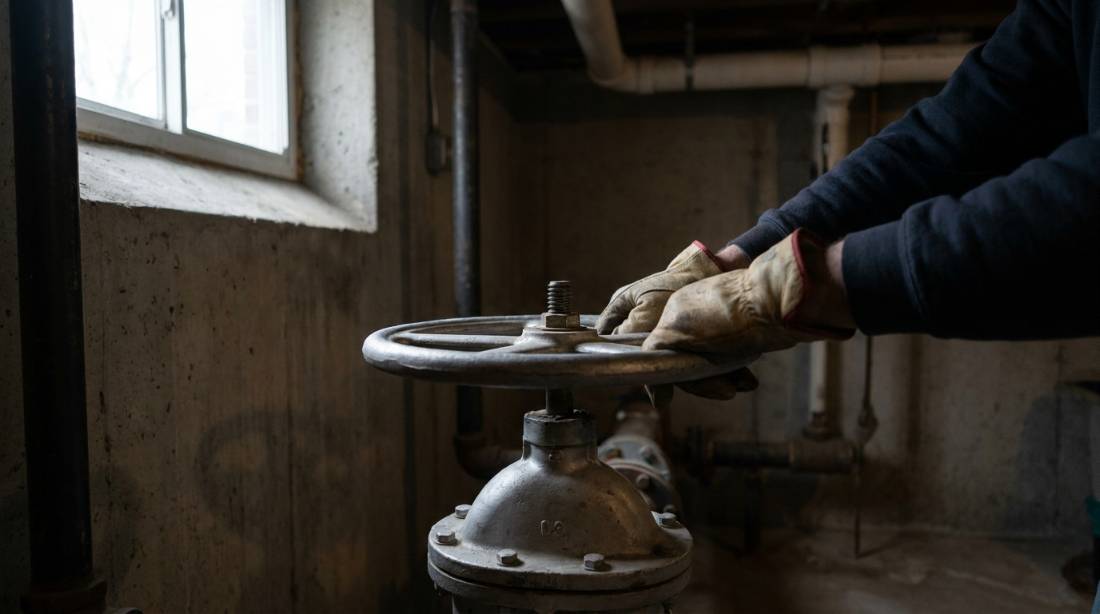
Basement water leak diagnosis
Water on the basement floor. The first job is finding out what kind of water it is.
Plumbing leak, groundwater, storm water or a backed-up drain, four different sources, four different trades, and one wet floor that looks the same in all four cases. Diagnosis first, because the wrong repair here is expensive and changes nothing.
If it is sewage, or if it is rising, that is a call to make now.
Four sources
What is actually on your floor
Each of these behaves differently, and the behaviour is the diagnosis.
Supply leak
Pressurised water escaping a pipe. Steady rate, indifferent to the weather, often a single traceable point, and it shows on the meter. The most expensive to leave alone because it runs continuously and you pay for all of it.
Drain or waste leak
Water only when something upstairs is used, a shower, a washing machine, a toilet. Frequently smells. Not on the meter, because the water was already paid for on the way in.
Groundwater
Arrives at the floor-wall joint or up through the slab, correlates with rainfall and the season, and rises and falls with the water table. Worst in the river bottoms and after prolonged wet spells.
Surface water
Comes in during the storm, not after it. Usually traceable to gutters discharging at the foundation, ground sloping toward the house, or a window well without drainage. Often the cheapest of the four to fix.
Not sure which you have? Describe when it appears and where, that is usually enough for us to narrow it down on the phone.
Talk It ThroughDo this first
Three tests that separate plumbing from weather
The meter test
Everything off, read the meter, wait fifteen minutes using no water, read again. Movement means a supply leak somewhere in the house or the yard. No movement, with a wet floor, largely rules the supply system out, which is valuable information before anyone starts opening things.
The weather diary
Note whether the water appears during rain, hours after rain, or on dry days too. Rain-correlated water is a drainage problem; water on a dry week in July is a pipe. This one costs nothing but a few days of attention and it is often decisive.
Fixture-by-fixture
If the floor is only wet after a shower or a wash cycle, you have a drain leak and you have just identified which line. Run one fixture at a time and watch. It is slow, unexciting, and it finds things instruments do not need to be brought in for.
Straight away, if it is sewage
Anything coming back up a floor drain, a basement toilet or a laundry standpipe means the line out of the house is not moving. Stop using water in the house entirely, keep people and pets clear, and call. Every further flush adds to what is on your floor.
One more distinction worth making early: condensation. In a humid Kentucky summer, cold supply pipes and ductwork sweat freely in a cool basement, and the drips collect in a way that looks convincingly like a leak. Insulating the cold lines settles it, and a plumber who suggests that rather than hunting for a phantom leak is doing you a favour.
Kentucky ground
Where you live changes which of the four is most likely
A wet basement in Ludlow and a wet basement in Bowling Green usually have different causes, and knowing that shortens the diagnosis.
River bottoms
High water table as a baseline
Along the Ohio and its tributaries, and in the low ground below the river towns, groundwater sits close to the surface as a normal condition rather than an event. Basements there depend on their sump pump and their perimeter drainage far more than average.
Suspect groundwater first, and test the pump before assuming a pipe.
Karst limestone
Water arriving from an odd direction
Across the Bluegrass, central Kentucky and the cave country, water travels through fissures and voids rather than soaking evenly through soil. It can appear under a slab from a direction that makes no sense at the surface, and a yard leak may never puddle at all.
Here the meter test earns its keep, because visual evidence is unreliable.
Hillsides
Water moving downhill toward the house
On sloping ground in the eastern counties and the river hillsides, a basement or daylight basement can be taking water that is running down the slope and hitting the uphill wall, particularly where a driveway or a hard surface channels it.
Frequently a grading and diversion problem, and frequently the cheapest of all of these to solve.
Region, ground and house type all narrow it down before anyone arrives.
The mechanical suspect
Before blaming the pipes, test the pump
In a basement that has been dry for years and is suddenly not, the sump pump is the first thing to check and the easiest to check. Fill the pit with a bucket of water and watch: the float should lift, the pump should run, the water should leave, and the check valve should seat with an audible thump when it stops.
Four failures account for nearly all of it. A stuck or obstructed float that never triggers. A seized pump that hums or does nothing. A failed check valve, which lets the discharge column run straight back into the pit so the pump cycles endlessly and never wins. And a discharge line that is blocked, frozen at the outlet in winter, or draining back toward the house because of how it was routed.
Two additions worth asking about while somebody is there: a battery backup, because the storm that fills your pit is the storm that takes the power out, and an alarm, because a pit quietly failing at two in the morning is how finished basements are lost.
The most common cause of a flooded basement is not a burst pipe. It is a pump that was fine last time anybody looked, four years ago.
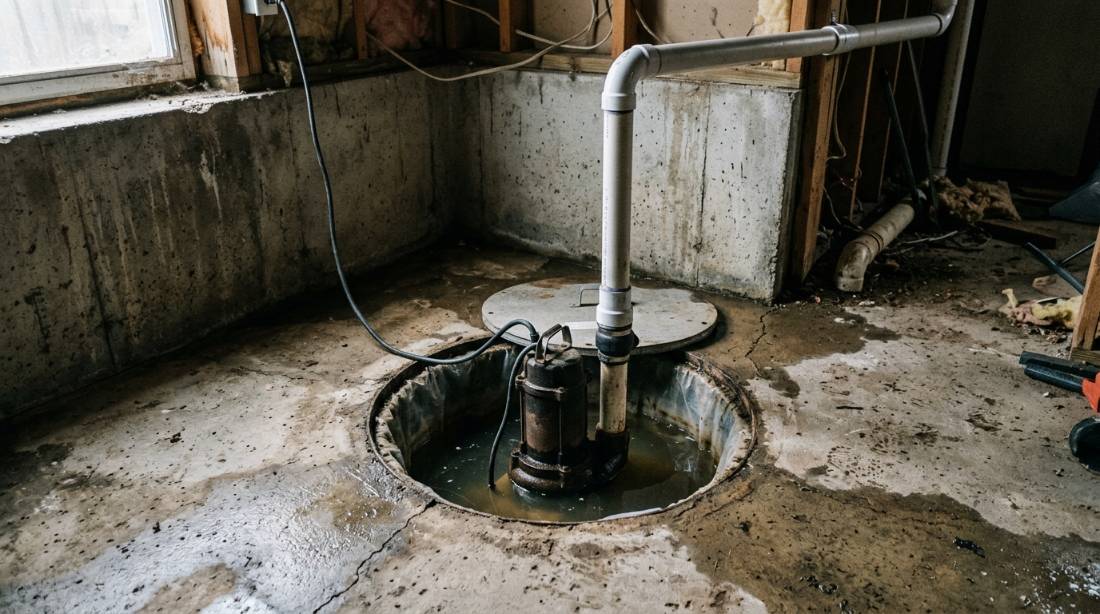
Pump running constantly, or not at all? Either one is worth a same-day look.
Get the Pump CheckedHonest referral
Who you actually need, once you know what the water is
This is the part of the page that costs us work and keeps us useful. A plumber is the right call for a supply leak, a drain or waste leak, a sewer line that is backing up, a failed sump pump or check valve, and storm water finding its way into a sanitary line. Those are all pipework, and they are all ours.
A plumber is not the right call for a persistent groundwater problem, a footing drain that has failed, or exterior grading and gutter discharge putting water against your foundation. That is drainage and waterproofing work, and no amount of plumbing repair will change it. Structural cracking and movement is a third trade again.
So the diagnosis visit has a genuinely useful outcome even when the answer is "not us": you learn what the water is, you get told which trade solves it, and you stop paying people to fix things that are not the problem. If it turns out to be a pipe, we are already there.
- Clean water, steady, meter moving, supply leak. Plumber, promptly.
- Only after fixture use, often smells, drain leak. Plumber.
- Backing up out of a drain, blocked or surcharged sewer. Plumber, urgently.
- Appears with rain, at the perimeter, drainage and grading. Not a plumbing repair.
- Pit full, pump silent, sump pump or check valve. Plumber, same day.
Would rather just have somebody look at it? That is a normal request and a straightforward visit.
Arrange a DiagnosisRelated work
Locating a hidden supply leak, and the two places basement water usually comes from.
Questions
Basement water, answered straight
Timing and location are the two best clues. Plumbing leaks run at a steady rate regardless of the weather and usually have a single, traceable source. Groundwater and surface water arrive during or shortly after rain, appear at the floor-wall joint or through the slab rather than from above, and dry up between storms. A meter test with all fixtures off settles the question quickly.
Possibly not for the water itself, but it is worth one conversation. Rain-driven water is a drainage, grading and sump problem more than a pipe problem. Where a plumber matters is if the sump pump or its check valve has failed, if a floor drain is backing up rather than draining, or if the storm water is getting into the sanitary line, that last one is a real and separate issue.
Turn off every water-using fixture and appliance in the house, then read the water meter, wait fifteen minutes without using any water, and read it again. Movement means water is escaping from your pressurised system somewhere. No movement over fifteen minutes with a wet basement points strongly at groundwater, surface water or a drain rather than a supply leak.
That water is arriving from the drain system rather than leaving through it, which usually means the line out of the house is blocked or overwhelmed. In heavy rain it can also mean a combined or infiltrated sewer is surcharged and backing up into the lowest opening. Stop using water in the house and call, every flush adds to what is coming back.
Sewage coming back into the house is urgent at any hour. Clean water at a steady rate is same-day, because a supply leak that size is both costly and doing structural work you cannot see. A damp patch after a heavy storm that dries by itself is a project to plan rather than an emergency to call about at midnight.
Yes, and we will. Our value in that situation is a clear diagnosis: if the water is not coming from your plumbing, we say so rather than selling you a repair that changes nothing. Exterior grading, gutter discharge, footing drains and interior drainage systems are a different trade, and the honest referral saves you money.
Always. A pump that has not run in months, a stuck float, a failed check valve that lets the pit refill, or a discharge line that freezes or drains back are all common and all easy to miss. Testing it takes minutes: fill the pit with a bucket and watch it cycle, then listen for the check valve seating properly when it stops.
Two big regional factors. In the Ohio and tributary river bottoms the water table is naturally high, so basements in those towns lean on their sump pumps and their perimeter drainage far more than average. In the karst limestone country, water moves through fissures and can arrive under a slab from an unexpected direction, and a supply leak in the yard may never appear at the surface at all.
Find out what the water is before you pay anyone to stop it
One diagnosis, a plain answer, and the right trade, even when the right trade is not us.