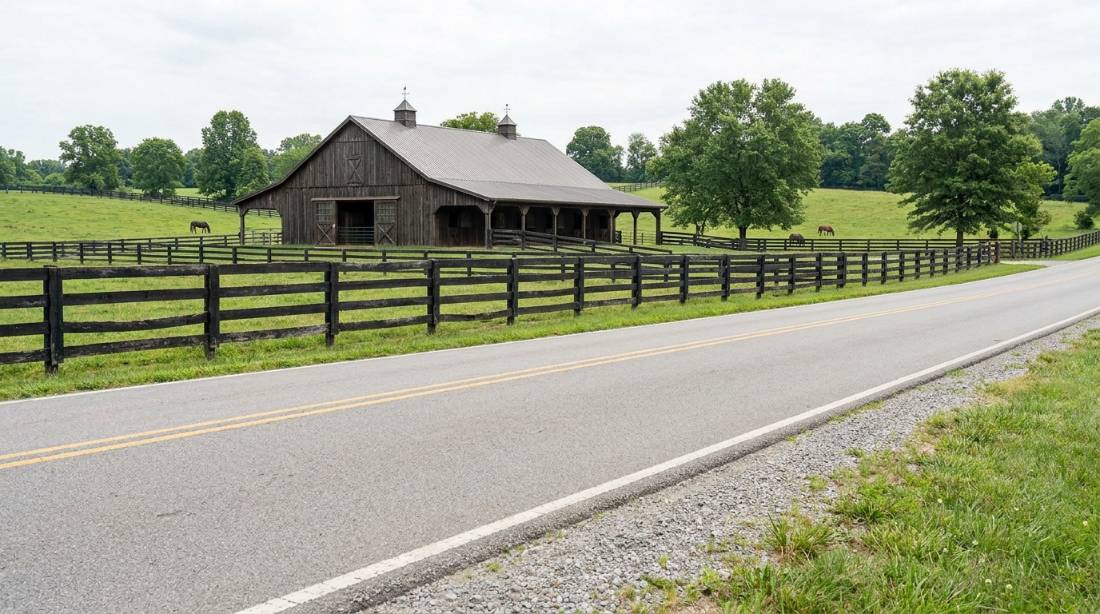
Lexington & the Bluegrass
Plumbers across Lexington and the Bluegrass counties
Fayette County and the horse-farm counties around it, 32 communities. This is limestone country, and the rock under the house explains most of what goes wrong.
Open 24 hours. Tell us your town and what is happening.
- 32 communities
- 14 counties
- Karst and hard-water specialists
- Same-day and emergency
Limestone decides almost everything here
The Bluegrass sits on soluble limestone. Rain does not soak evenly through soil the way it does in most of the country, it finds a joint, opens it over centuries, and travels through rock. That is why Lexington has sinkholes in ordinary back gardens and why Royal Spring, which supplied Georgetown for two hundred years, comes out of the ground already a river.
For plumbing this has two consequences. First, water that escapes a pipe does not stay put: a service-line leak can surface fifty yards away, or not surface at all and simply disappear into rock, which is why the bill is often the only symptom. Second, everything the water touches on the way to your tap is limestone, so the Bluegrass has some of the hardest water in Kentucky, scaled heaters, crusted aerators, and softeners that earn their keep.
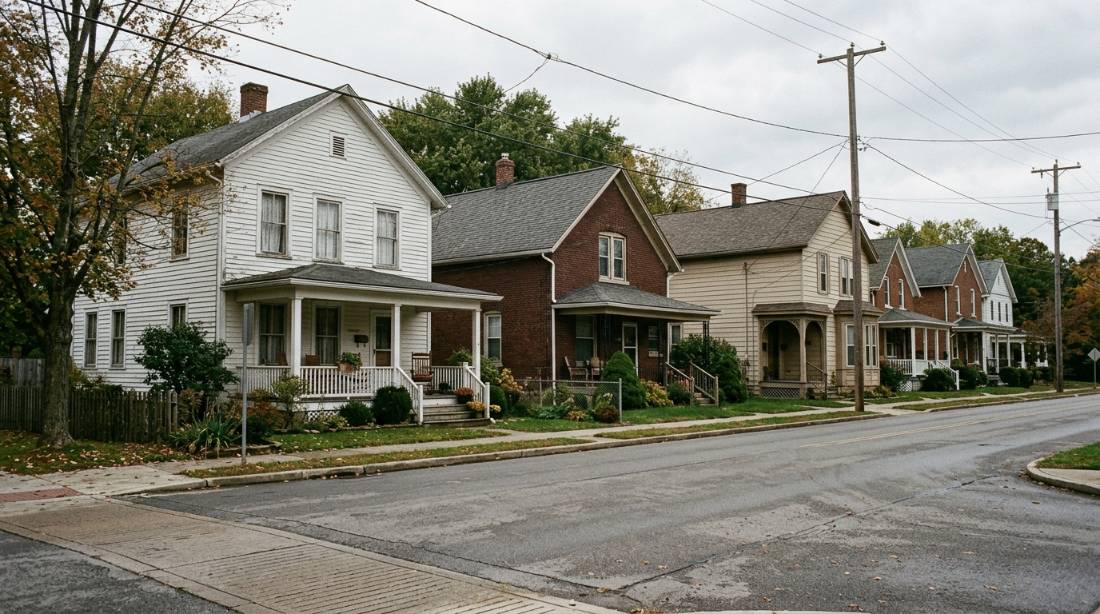
The housing runs from Victorian brick in the streets south of Lexington’s downtown to enormous 1990s-onward subdivision growth in Jessamine, Scott and Madison. Out on the farm roads in Woodford, Bourbon and Garrard you are frequently on well water, and the counties at the eastern edge, Powell and Estill, around Stanton, Clay City and Irvine, start to behave like the mountains rather than the Bluegrass.
A water bill that doubled with nothing to show for it
In karst that is the normal presentation of an underground leak, the water leaves and there is nothing wet to find. Leak detection before excavation, always.
Bill jumped and nothing looks wet? That is a common one here. Describe it and we will say where to look.
Get Help FastLargest communities
Where most of the calls come from
Fayette County runs to on its own; the ring of county seats around it accounts for most of the rest.
Lexington
All of Fayette County. Victorian brick near downtown, huge suburban rings beyond, and karst under all of it. Five district pages.
Nicholasville
Jessamine County seat and one of the fastest-growing towns in the state. Mostly modern build on city services.
Richmond
Madison County seat, a university town, with older rental stock near campus and new subdivisions outside.
Georgetown
Scott County seat, built around Royal Spring, with heavy industrial and residential growth since the 1980s.
Winchester
Clark County seat east of Lexington, with a historic core and farmland immediately beyond it.
Versailles
Woodford County seat in the middle of horse country. Town on city services, farms very often on wells.
Paris
Bourbon County seat on Stoner Creek, with substantial pre-1900 housing stock.
Berea
Madison County at the point where the Bluegrass gives out and the Cumberland foothills start.
Every community in the list below is covered on the same number, whether it has its own page yet or not.
Full coverage
Every Bluegrass community we cover
32 communities in Bourbon, Clark, Estill, Fayette, Garrard, Harrison, Jessamine, Madison, Montgomery, Nicholas, Powell, Scott and Woodford counties.
Every community on this list has its own page now. Coverage and the phone number are identical whichever one you land on.
Ground conditions
What a pro expects to find in the Bluegrass
The rock, the water chemistry and the age of the housing, in that order.
Karst
Water travels through rock
Soluble limestone with open joints, swallow holes and cave passage. Escaped water can move a long distance before it appears, and often never appears at all.
It means never dig on a guess here. Acoustic and pressure-based location first, excavation second.
Hard water
Straight off the limestone
Dissolved calcium and magnesium at levels that scale a water heater element, crust an aerator and shorten the life of every valve in the house.
A softener sized from an actual water test is one of the few upgrades that pays for itself in this region.
Sinkholes
Both cause and consequence
A new depression in a lawn can be natural karst collapse or a failed sewer lateral washing soil into a void. The two look identical from above.
Get a camera down the line before assuming geology, and before assuming plumbing.
Any hour, anywhere in the Bluegrass.
The services called for most in the Bluegrass
Hidden leaks, hard water and sewer laterals in karst ground.
Questions
Bluegrass questions
It is the single most common leak presentation in this region. In karst the escaping water follows joints in the limestone rather than pooling, so there is frequently nothing to see at the surface. Shut every fixture off and watch the meter: if it is still turning you have a leak, and the next step is acoustic detection rather than a shovel.
Hard enough to matter. Water drawn from limestone aquifers and from the Kentucky River carries substantial dissolved calcium and magnesium. The practical effects are scale on water heater elements, aerators that clog every few months and shortened life on cartridge valves. A test tells you the actual grains per gallon so a softener can be sized rather than guessed.
Both are common here and they look the same from above. The distinguishing question is whether a sewer or water line runs beneath it. A broken lateral washes soil away and creates a void that eventually collapses; natural karst collapse happens with no pipe involved. A camera inspection settles it for far less than an exploratory dig.
Yes, Woodford, Bourbon, Scott, Harrison, Nicholas, Garrard and the rest. Farm properties are frequently on private wells with pressure tanks and long buried runs to outbuildings and waterers, which is a different job from a town service call. Mention it when you ring so the right pro comes out.
Geologically they are the transition. Stanton, Clay City, Slade, Irvine and Ravenna sit where the Bluegrass runs into the Cumberland escarpment, so you get steeper ground, longer service lines and more private wells and septic than in Fayette. We cover them from this region but a pro treats them more like the eastern counties.
It tends to need speed. Multi-unit conversions of older houses often have one original stack serving fixtures that were added decades later, so a blockage affects several tenants at once and a leak travels between units. Landlords usually want a camera inspection between tenancies rather than an emergency call in the middle of one.
No. Kentucky Plumbing HQ is a referral service: we take the call, work out what the job is, and connect you with an independent local plumbing professional who works in your area. Pricing, the work and the workmanship guarantee are between you and the contractor who attends.
Lexington, Nicholasville, Georgetown or a farm road in Woodford County
One number for all 32 Bluegrass communities, answered around the clock.