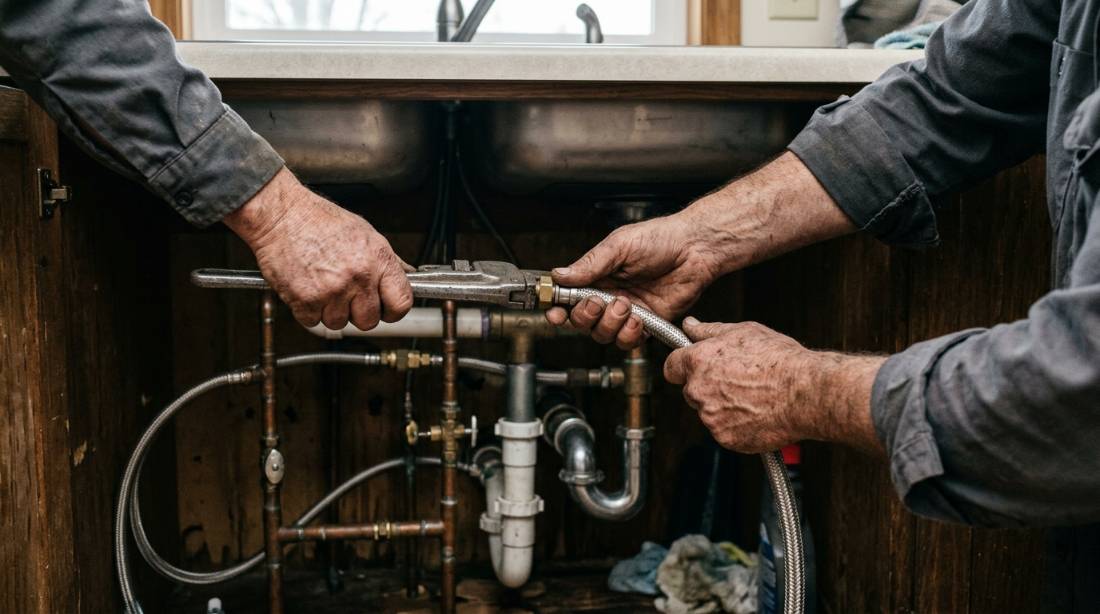
A plumber for your part of Kentucky, on the phone right now
One call connects you with an experienced local plumbing pro, in Louisville and Lexington, in the river towns, across the Bluegrass and out into the mountain counties. Burst pipe, backed-up sewer, no hot water, or a leak you cannot find.
Open 24 hours. Tell us your town and what is happening, we will tell you who is close and how long they will be.
- 24/7 phone coverage
- Same-day and emergency response
- Upfront pricing before work begins
- No hidden fees
- Workmanship guarantee on completed work
Statewide, town by town
Kentucky is not one plumbing market, and we do not treat it like one
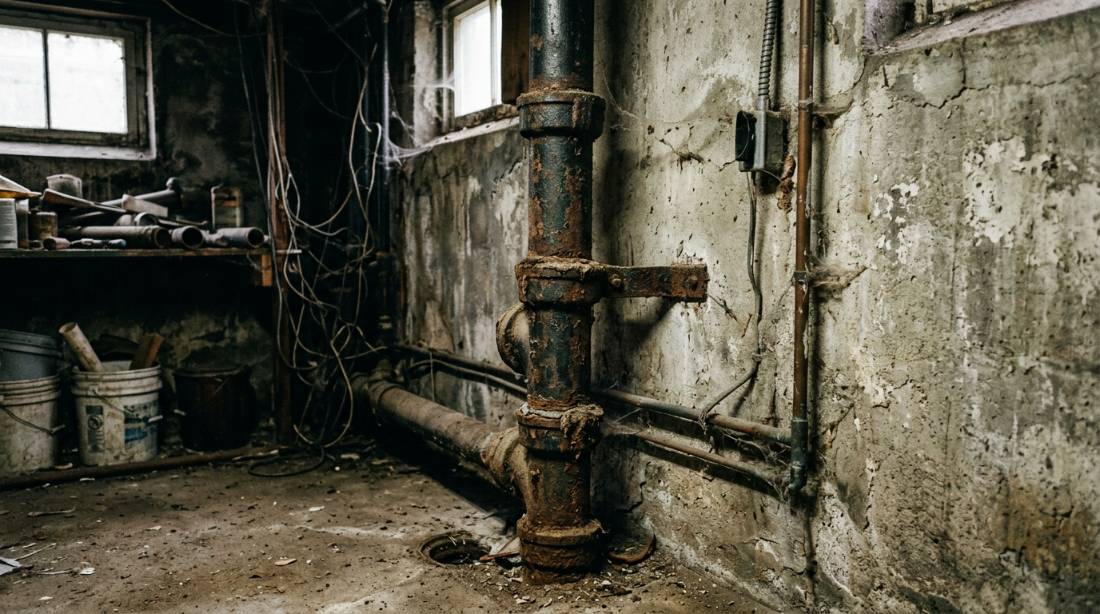
A house in Old Louisville and a house on a ridge road in Letcher County have almost nothing in common below the floor. One has a hundred-year-old brick shell, a full basement, cast-iron drains and a lateral running under a mature street tree. The other sits on a crawl space at the end of a long private water line, probably on a well, with a septic tank somewhere downhill.
Both are ordinary Kentucky houses, and both break predictably, but not the same way, and not with the same fix. That is why this service is organised by region first and town second: so the pro who takes your job already expects the ground, the housing era and the water source they will find.
We are not a plumbing company. We are the phone number that finds you one. You call, we work out what is wrong and where you are, and we put you together with an independent local plumbing professional who works in your area. No forms, no waiting for an email back, no request sitting in an inbox overnight while your basement takes on water.
If you are dealing with it right now
Water you cannot stop, sewage backing up, no water at all, or a smell of gas, those are phone calls, not reading. Call (844) 924-3770 and shut the water off at the main if you can safely reach it.
Not sure it can wait until morning? Describe it and we will tell you honestly.
Get Help Fast, (844) 924-3770Where we cover
Seven regions, 509 communities
Pick the part of the state you are in. Each regional page covers what is genuinely different about plumbing there, and lists every community we serve.
Louisville Metro
Jefferson County and the ring around it, Oldham, Bullitt, Shelby, Spencer, Henry, Trimble, Meade. Pre-war brick and shotgun housing in the older city, a wide postwar belt outside it, basements common throughout.
Lexington & the Bluegrass
Fayette, Woodford, Jessamine, Scott, Clark, Madison, Bourbon and their neighbors. Limestone country, where what happens underground matters as much as what happens under the sink.
Northern Kentucky
Kenton, Campbell, Boone, Grant and the counties facing Cincinnati across the river. Nineteenth-century river-town housing on the hillsides, newer subdivision growth spreading south and west.
Central Kentucky
Hardin, Nelson, Franklin, Anderson, Mercer, Boyle and the central and south-central counties. County seats with older cores, farm properties on well and septic a short drive outside them.
Eastern Kentucky
Floyd, Harlan, Letcher, Pike, Perry, Knott, Leslie, Breathitt and the mountain counties. Steep ground, long private service runs, crawl spaces, and well and septic away from the town systems.
Northeast Kentucky
Boyd, Greenup, Carter, Lewis, Rowan, Bath, Fleming and Mason. Ohio River towns with high groundwater near the bottoms, and foothill communities rising away from the water.
Western Kentucky
Grayson, Breckinridge, Barren, Edmonson, Warren and the cave country. This is karst at its most pronounced, sinkholes, springs and drainage that behaves unlike anywhere else in the state.
Every community we cover
Every Kentucky town on our map, grouped by region, with its communities.
Ground conditions
Three things about Kentucky ground that change what goes wrong
Buried lines do not fail in the abstract, they fail because of what is around them. In this state that comes down to three situations, and which one you are in depends on where you live.
Karst limestone
Ground that moves and drains oddly
Across the Bluegrass, central Kentucky and the cave country west of it, the bedrock is limestone that groundwater has been dissolving for a very long time, leaving voids and soil that settles unevenly into them.
Two practical consequences. Buried lines get bent rather than crushed, slow differential settlement stresses a joint until it opens. And surface water disappears fast, so a leaking supply line never puddles and is harder to spot. Locating matters more here than digging.
River bottoms
High groundwater near the water
Along the Ohio and its tributaries, and in the bottoms below the river towns, the water table sits close to the surface. Nothing dramatic follows from that on a normal day, but it changes the work.
An excavation can find water before it finds the pipe, so trenches need pumping and shoring. Basements here lean on their sump pump more than most, and a failed pit shows quickly. Older laterals sit in saturated ground year-round, which is hard on cast iron and clay alike.
Hills and hollows
Long runs and difficult access
In the eastern counties, and on steep ground in the northeast and along the river hillsides, houses often sit well above or below the road. The service line can be a long private run rather than a short municipal one.
That affects pressure at the fixtures, how long it takes to isolate a leak, and what equipment can physically reach the property. A jetter that cannot get up the drive is not an option, so access often decides the approach before anything else.
Tell us your town and we will match you to someone who works in it.
What we get called about
The jobs Kentucky homeowners phone us for
Emergencies first, then the things that quietly get worse. Each has its own page.
Emergency Plumbing
Water you cannot stop, at any hour.
Burst Pipe Repair
Cutting out the failed section, getting the water back on.
Frozen Pipe Repair
Every winter brings a cold snap. Crawl spaces go first.
Sewer Backup
Waste coming back up a floor drain or a basement fixture.
Leak Detection
Finding the one you can hear, smell or see on the bill but not locate.
Drain Cleaning
Slow, gurgling or stopped, and why the same one keeps going.
Sewer Line Repair
The lateral between the house and the main, and how it gives out.
Water Heater Repair
No hot water, not enough of it, or a tank that has started weeping.
Crawl Space Plumbing
Where most Kentucky leaks hide, sometimes for weeks.
Sump Pumps
Pit, float, check valve, and the backup that saves it.
Well Pump Service
Pressure tanks, switches and pumps, off municipal water.
Whole-Home Repiping
When patching galvanized supply stops being worth doing.
Thirty-seven services in total, from hydro jetting to trenchless sewer work.
Through the year
What the Kentucky calendar does to a house
Four real seasons means four different sets of phone calls, all of it predictable enough to get ahead of.
Winter, freeze
A hard cold snap finds the pipes with the least protection: crawl spaces, garages, exterior walls and outside hose bibs. Insulation and a disconnected hose in autumn prevents most of it. Thawing a frozen line badly is worse than the freeze itself.
Spring, water below
Heavy spring rain is when basements and crawl spaces show what they have been hiding. Sump pumps run for the first time in months and some of them do not. A drain that was merely slow becomes a drain that backs up.
Summer, roots and use
Mature trees are at their thirstiest, and a clay or cast-iron lateral with an open joint is a reliable water source for them. The house is working hardest too, so a marginal water heater or a struggling well pump declares itself now.
Autumn, get ahead of it
October is the cheapest month of the year to deal with plumbing. Drain the hose bibs, check crawl-space insulation, test the sump pump and its backup, flush the water heater, and get any sluggish drain looked at before the first freeze.
How it works
One call, three steps, no forms
You call and describe it
Your town, your communities and a sentence about what is happening. If you know whether you have a basement, a crawl space or a slab, and whether you are on city water or a well, say so.
We match and dispatch
We find an experienced independent plumbing pro who works in your area and is genuinely available. You get told when they will actually be there, not when we would like them to be.
You get a price first
The pro assesses the job on site and gives you a price before any work starts. If opening it up changes the picture, you hear about that first. No hidden fees, and a workmanship guarantee on completed work.
It is a two-minute phone call. If you need a different trade, we will tell you that rather than send someone.
Get a Plumber Out Here
Why local matters here
Somebody who has been under a house like yours before
There is a version of this business that dispatches whoever is nearest and hopes. We would rather match on what the job needs, because in Kentucky the gap between houses is unusually wide.
A pro who works the older parts of Louisville or Covington opens a wall expecting galvanized supply and cast-iron waste, and is not surprised by a lateral under a street tree. A pro who works Madison or Warren County thinks about limestone and where the water went. A pro who works the eastern counties owns the right vehicle for a steep gravel drive, and knows what a long private service run does to pressure at the far fixture.
None of that is exotic knowledge. It is just local, and it is the difference between a diagnosis on the first visit and a second appointment.
The right question on the phone is usually worth more than the fastest truck. Tell us what the house is, not just what the leak is.
Rules on permits, inspections, sewer responsibility and septic requirements exist and vary between cities, counties and water districts. We will not tell you what yours are, check with your local authority or utility, but the pro on site will know when something needs handling formally.
Prices are given on site before work starts, never guessed at over the phone.
Questions
Straight answers before you call
It depends where you are. Around Louisville, Lexington and Northern Kentucky there are usually several pros within a short drive and same-day arrival is normal. In smaller towns and the mountain counties the drive is longer, and the honest answer may be a few hours rather than one. Tell us what you are seeing and we will give you a realistic window.
Both. Our coverage runs to 509 Kentucky communities, from Louisville and Lexington down to towns of a few hundred people in the eastern counties. Small communities are the larger share of the list. If your town is anywhere on that list, call and we will tell you plainly who is available.
Water you cannot stop, sewage coming back into the house, no water at all, or a smell of gas. Those are calls to make immediately, at any hour. A slow drip or a sluggish drain is not an emergency, but it is worth a same-day look before it becomes one. If you are unsure, describe it and we will tell you honestly.
If water is escaping and you cannot stop it at the fixture, yes. In a house with a basement the main shutoff is usually on the wall where the service line enters; in a crawl-space house it is often at the meter outside. Turning it clockwise until it stops limits the damage. Worth locating that valve now, before you need it in the dark.
Much of the Bluegrass and central Kentucky sits on limestone that water has cut cavities into over a very long time, so ground above it can settle unevenly and put bending stress on buried lines. Elsewhere the issue differs: river-town properties have high groundwater that changes how an excavation is done, and hillside properties have long, steep service runs.
We do not quote prices on this site, because the number depends on the job, the access and what is found once a panel or a floor is opened. What we insist on is that the pro we dispatch gives you a price before work begins. If the job changes once it is opened up, you hear about it before anyone continues.
A plumber handles the house side: water lines, pressure tank and switch, pump controls, drain lines and the sewer line out to the tank. Pumping a septic tank, or work on the drain field itself, is a septic contractor's job and we will say so rather than send the wrong trade. Outside municipal water and sewer, that split matters.
Your town and ZIP code, a sentence about what is happening, roughly when it started, and whether you have a basement, a crawl space or a slab. If you know whether you are on city water or a well, say so. That is enough to match you with the right pro and the right tools.
An independent local plumbing professional in or near your community. Kentucky Plumbing HQ is the connector: we take the call, work out what you need, and put you together with someone who works in that area. The working relationship, and the workmanship guarantee on the completed job, is with the contractor who does the work.
Still standing there looking at it?
We answer at three in the morning the same way we answer at three in the afternoon, and we will tell you straight whether this is a tonight job or a tomorrow job.