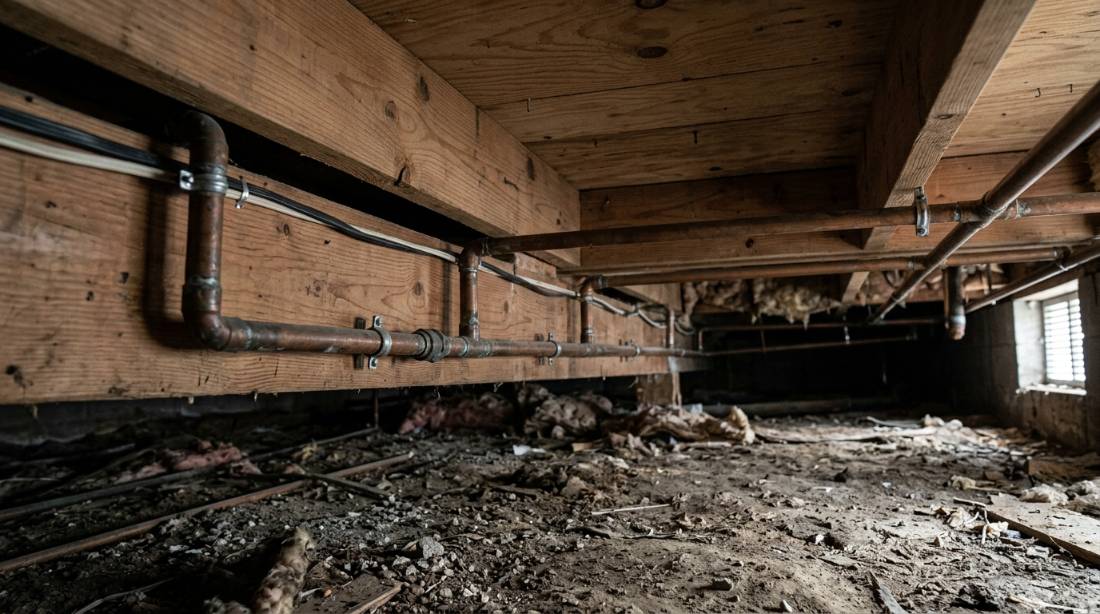
Septic systems
The house side of the system, up to the tank
We clear and repair the plumbing between your fixtures and the septic tank, camera the line, and tell you clearly when the problem is past the tank, where pumping, tank work and field repairs belong to a licensed septic contractor and the health department.
Statewide. Sewage surfacing in the yard is a health matter, call the health department as well.
Scope
What we do, and where the boundary sits
Being clear about this saves you money and gets the right trade on site the first time.
House drains and the building sewer
Blockages, bellied or broken pipe, root intrusion and failed connections between the fixtures and the tank inlet. This is ordinary drain work and it is squarely ours.
Camera inspection to the tank
A camera run tells you whether the problem is a blockage in the line, a structural defect, or a system that is backing up from the tank because the tank or the field is the real issue.
Fixture and venting side
Slow drains across several fixtures, gurgling, and smells are often venting or a partial line blockage rather than the septic system at all. Worth eliminating before anyone digs.
Tank, pumping and field
Pumping, baffles, filters, distribution boxes, drain fields and repairs past the tank are licensed septic work. We identify it, document it, and tell you plainly that it is a different trade.
Not sure which side of the tank your problem is on? A camera run settles it.
Book an InspectionHow we work
Establishing where the problem is
Read the symptoms across the house
One slow fixture is a fixture problem. Everything slow together, gurgling toilets, or the lowest drain in the house backing up first, points to the building sewer or beyond it.
Clear and camera the building sewer
Cable or jet the line to restore flow, then camera it to see the actual condition, roots, a belly holding water, a broken hub, or a line running full because it cannot discharge into the tank.
Report honestly, including when it is not ours
If the line is sound and the tank is full to the inlet, the problem is the tank or the field, and you need a septic contractor and possibly the health department. We say that clearly rather than selling you more drain work.
A line that refills after clearing is telling you something
When a cleared building sewer backs up again quickly and the camera shows a full line to the tank, the blockage was a symptom. The system is not accepting flow, and more cabling will not change that.
Sewage surfacing in the yard, or backing into the house, is a health hazard as well as a plumbing problem. Keep people and pets away from it, and involve your local health department alongside whoever does the repair.
Living with it
What actually keeps a septic system working
Septic systems fail from overload, solids and neglect far more often than from age alone.
Pump on a schedule, not on symptoms
Every three to five years for a typical household, more with heavy use or a disposal. Solids that leave the tank reach the drain field, and a damaged field is the most expensive failure in the whole system.
Water volume matters as much as content
A septic system needs time for solids to settle. Long laundry marathons, a running toilet, or a leaking fixture push hydraulic load through the tank and carry solids into the field.
Only paper and waste
Wipes labelled flushable, hygiene products, grease, paint, solvents and heavy chemical cleaners all cause trouble, blockages in the line, sludge in the tank, or damage to the bacteria the system depends on.
Protect the field
No vehicles, no structures, no deep-rooted planting over the drain field, and roof and surface water directed away from it. A saturated field cannot accept effluent, and downspouts are a common culprit.
Almost every failed drain field we see had a full tank behind it. Pumping on schedule is the cheapest maintenance in rural plumbing.
Backing up now? Stop using water in the house and call.
Talk to a Pro TodayKentucky specifics
What the local conditions demand
Clay soils, steep ground, karst, and health department oversight that varies by county.
Clay soils
Slow percolation is normal
Much of Kentucky has heavy clay that drains slowly, so drain fields are sized generously and are less tolerant of extra hydraulic load than sandy soils would be.
Fixing leaking fixtures and diverting surface water matters more here than people expect.
Steep terrain
Pumped systems are common
Hill-country properties frequently need a pump or a dosing chamber to lift effluent, which adds a float, a pump and an alarm that all need to work.
If the alarm sounds, stop using water and get it looked at, the tank is filling with nowhere to go.
Karst areas
Groundwater is vulnerable
Where limestone is fractured, effluent can reach groundwater quickly, which is why health departments in karst counties can be strict about system design and repair.
Any repair past the tank goes through the local health department. That is not bureaucracy, it is the aquifer.
Wet winters
Fields saturate seasonally
A field that copes in August can back up in February when the ground is already saturated and evapotranspiration is near zero.
Seasonal backups with a sound building sewer are a field capacity signal, not a drain cleaning problem.
Tell us what backs up first and whether anything is showing in the yard.
Related work
The drain work on the house side, and what makes it worse.
Questions
Septic plumbing, answered straight
A camera run answers it. If the line has a blockage, a belly or a break, that is house-side work. If the line is sound and running full to a tank that is at its inlet, the system is not accepting flow and the tank or field is the issue, a different trade.
Every three to five years for a typical household, sooner with a large family, heavy water use or a garbage disposal. Waiting for symptoms means solids have already been leaving the tank, and what they damage is the drain field.
No. Pumping, tank repairs, baffles, filters, distribution boxes and drain field work are licensed septic contractor territory in Kentucky, usually with health department involvement. We handle the plumbing up to the tank and tell you plainly when you need the other trade.
With restraint. Ground food adds solids, which shortens pumping intervals and loads a marginal system. If you use one, keep it for incidental scraps and stay ahead on tank maintenance.
Wipes of any kind including those sold as flushable, hygiene products, grease, coffee grounds in quantity, paint, solvents, and strong chemical drain cleaners. The first two cause blockages; the rest damage the bacterial process the system runs on.
Generally no. A normally used system develops the bacteria it needs. Additives do not replace pumping, and some aggressive products can carry solids out of the tank and into the field, which is the opposite of helpful.
Treat it as a health hazard: keep people and pets away, stop using water in the house, and contact both a licensed septic contractor and your local health department. Surfacing effluent usually means the field is not accepting flow, and that is not a drain cleaning fix.
Seasonal saturation. Kentucky clay soils hold water in winter and plants are not moving any, so a field with limited spare capacity has nowhere to discharge. If the building sewer is sound on camera, that pattern points at field capacity.
We will tell you which side of the tank it is
Clear the line, camera it, and be straight with you about when the answer is a septic contractor.