Filtration and treatment
Test first. Equipment second.
Cloudy water, orange staining, a rotten-egg smell and a chlorine taste are four different problems with four different answers. Buying a system before anyone has tested the water is how houses end up with expensive equipment aimed at the wrong thing.
Statewide, well and municipal. Bacteria testing goes to a certified lab.
Diagnosis
Symptom, cause, and the treatment that matches
Most complaints resolve to one of these four. The order they are treated in matters as much as the equipment.
Grit, sand and cloudiness
Sediment, common on wells and after a main break or hydrant work. It abrasively wears valves and cartridges and it clogs everything downstream. A sized sediment filter, sometimes staged coarse-to-fine, goes first in the train.
Orange or brown staining
Iron, often with manganese. Stains laundry and fixtures, fouls softener resin, and needs oxidation and filtration rather than a cartridge. The concentration and whether it is dissolved or already oxidised decides the method.
Rotten-egg smell
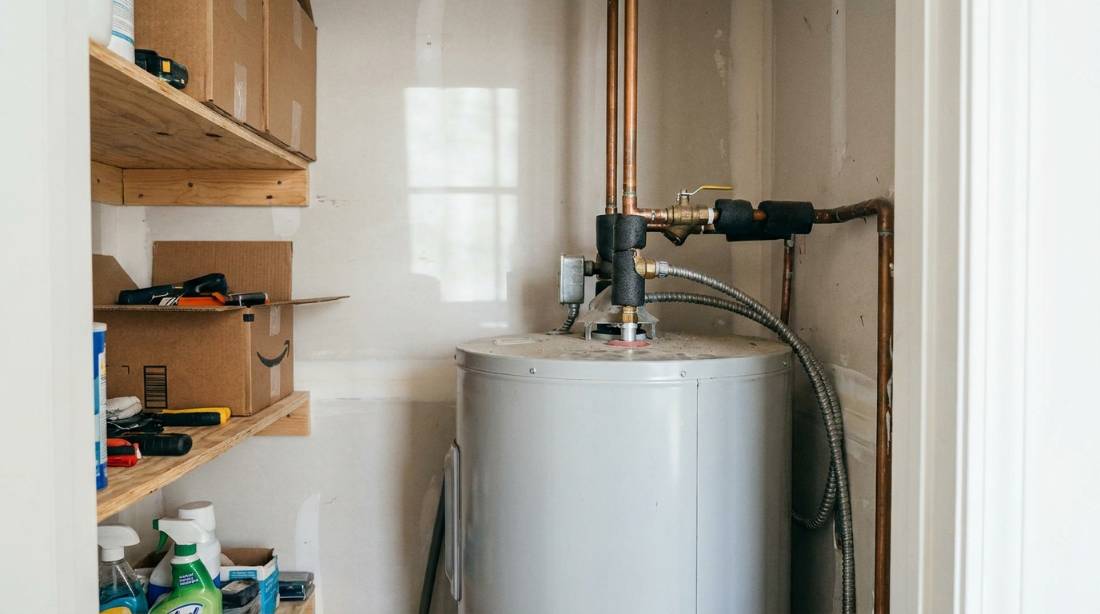
Hydrogen sulphide, or a reaction between sulphur bacteria and a standard water heater anode. Worth identifying which, because one needs treatment and the other needs an aluminium-zinc anode.
Taste, chlorine and lead concern
Municipal supply issues. Carbon at point of use handles taste and chlorine cheaply; lead concern needs certified reduction and, where the service line is suspect, replacement rather than filtration.
Do not guess. A test tells you which of these you have, and which you do not.
Get the Water TestedHow we work
From sample to installed system
Test and interpret
Hardness, iron, manganese, pH, sulphide and, on a well, a bacteria panel through a certified laboratory. pH matters because it determines whether an iron filter medium will work at all.
Design the train in order
Sediment, then oxidation and iron or sulphur removal, then softening, then any point-of-use polishing. Get the sequence wrong and you destroy resin or blind a filter within months, whatever you spent.
Install, commission and set a service interval
Plumbed with bypasses and unions, drains air-gapped to code, backwash timing set to the well recovery rate or the supply pressure, and a written schedule for cartridges, media and salt.
Sequence beats spend
A modest system in the right order outperforms premium equipment in the wrong order every time. Iron ahead of a softener is the classic and costly mistake, the resin pays for it.
Nothing here fixes bacteria. If a well tests positive for coliform, that is disinfection and a shock-and-retest programme, and it needs sorting before anyone discusses taste or staining.
Equipment
What each type of system is actually for
Whole-house and point-of-use solve different problems. Most houses want a small amount of both.
Whole-house sediment filtration
Protects every valve, cartridge, appliance and fixture downstream. On a well it is the first thing we fit and the one with the clearest payback.
Iron and sulphur filtration
Air-injection or media-based oxidising filters that backwash themselves. Selection depends on concentration, pH and iron form, which is exactly why the test comes first.
Carbon filtration
Removes chlorine, taste and odour. Whole-house carbon protects rubber components and improves every tap; a point-of-use cartridge is the cheap, effective answer for drinking water alone.
Reverse osmosis at the sink
The most thorough option for drinking and cooking water, and sensible as an under-sink unit rather than whole-house. It wastes some water and it removes minerals along with everything else, which some people notice in the taste.
Every over-specified treatment system we are called to look at has the same history: equipment chosen from a symptom, without a test.
One test, then a system that matches it.
Talk to a Pro TodayKentucky specifics
What the local conditions demand
Karst geology, a large well population, and old coal and agricultural land use in places.
Karst limestone
Hardness and turbidity together
Sinkholes and fractured limestone move surface water into the aquifer quickly, so wells in karst country can turn cloudy within hours of heavy rain.
Sediment filtration sized for surges, and a bacteria test after any event that changes the water visibly.
Well population
Nobody tests it for you
On municipal supply a utility monitors and reports. On a private well the homeowner is the entire quality programme, and most wells are tested once at purchase and never again.
Annual bacteria and nitrate testing is the baseline. Everything else follows from what that shows.
Iron and manganese
Staining is the usual complaint
Both are widespread in Kentucky groundwater. Iron stains orange, manganese stains black, and both foul softener resin if they reach it untreated.
Concentration and pH decide the medium. This is not a cartridge problem and cartridges will not hold it.
Sulphur smell
Very common on wells
Hydrogen sulphide produces the rotten-egg smell, and sulphur bacteria reacting with a magnesium water heater anode produces an identical complaint on hot water only.
If it is only the hot side, change the anode. If it is both, treat the water. Cold-only points to something else again.
Tell us well or city, what you can see or smell, and where it shows up.
Related work
What goes with treatment, and what treatment cannot fix.
Questions
Filtration and treatment, answered straight
On a well: bacteria, nitrates, hardness, iron, manganese, pH and sulphide, at least annually for the first two. On municipal supply, start with your utility’s published report and test at the tap for what concerns you specifically, lead, if the service line age is unknown.
Dissolved iron oxidising once it meets air. That distinction matters: dissolved iron passes straight through a sediment filter and needs oxidation first, while iron that has already precipitated can be filtered mechanically. The test tells us which.
Almost always the water heater anode reacting with sulphur bacteria in the tank. An aluminium-zinc anode and a hot flush usually resolve it without treating the whole supply. If cold water smells too, the source is the water itself.
They do different jobs. Whole-house protects plumbing, appliances and every fixture; point-of-use gives the highest quality at the tap you drink from. Sediment and iron belong whole-house; reverse osmosis belongs under the sink.
No. Filters remove particles and specific contaminants; hardness is dissolved calcium and magnesium, and removing it requires ion exchange. They are complementary systems, installed in a deliberate order.
Sediment cartridges commonly run three to six months and much less on a dirty well. Carbon depends on volume and chlorine load. Backwashing media beds last years but need their timing checked. We leave a schedule specific to what you have, not a generic one.
Shock chlorination and a retest, plus a look at the wellhead, casing and cap for the entry route, because disinfection without finding the cause tends to be temporary. Persistent positives call for continuous disinfection, and that is a conversation about the well, not a cartridge.
A correctly sized one has negligible effect; an undersized one or a neglected cartridge absolutely does. If pressure dropped after a filter went in, the usual causes are a clogged cartridge or a housing sized for a smaller house than yours.
Water problems are diagnosable
A test, a treatment train in the right order, and a service schedule somebody can actually follow.