Water service line replacement
When patching the same line stops making sense
A service line gets replaced for one of four reasons: it has failed more than once, it is made of something that fails as a matter of course, it is too narrow to supply the house, or the material itself is a health question. All four are common in Kentucky housing, and all four are better answered before the line makes the decision for you.
Statewide. Directional boring keeps drives and landscaping intact where the ground allows.
The decision
Repair or replace
A single failure in sound modern pipe is a repair. These four situations are where replacement is the cheaper answer over any real time horizon.
It has failed before
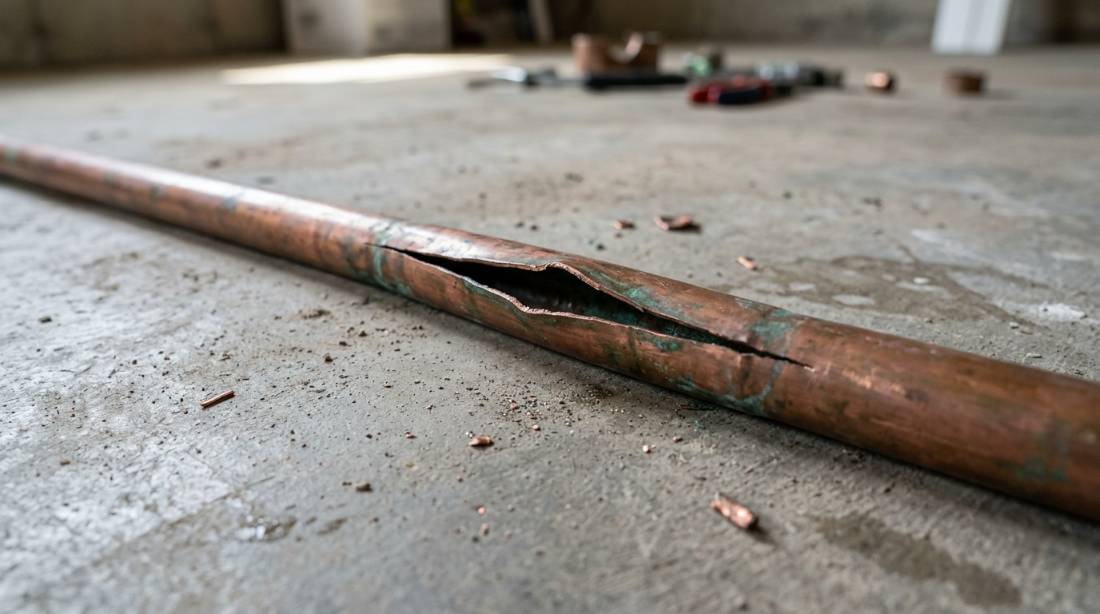
A line that has been patched once will usually be patched again. Each excavation costs what the last one did, and the pipe between the patches is the same age as the parts that failed.
Galvanized or polybutylene
Galvanized steel rust-chokes from the inside and eventually perforates. Polybutylene fails at fittings and is at end of life wherever it survives. Neither is worth spending money to preserve.
Not enough water
Two fixtures at once and the shower drops. An undersized or corrosion-narrowed line cannot supply a house that has gained bathrooms since it was built. Replacement is also the opportunity to upsize.
Lead, or unknown
Lead goosenecks and connectors persist in older service connections, and utilities across the state are inventorying them. If nobody can tell you what your line is made of, that is worth resolving.
Patched once already? Worth pricing the whole run before the next hole.
Get a Line AssessedThe job
How a replacement runs
Locate everything first
The existing line is traced and every other buried utility on the corridor is located, gas, electric, communications, sewer. Trenchless methods depend on this being right, and it is the step that separates a planned job from an incident.
Bore or trench
Directional boring drills a path and pulls new pipe through from a pit at each end, leaving the surface between untouched. Where the ground has too much rock, or the run has to be re-laid at a new depth or line, open-cut is the honest choice and often cheaper in open ground.
Connect, pressure test, disinfect
New line tied in at the meter and at the house, pressure tested, then flushed and disinfected before it goes into service. The utility inspects the meter connection in most jurisdictions, and the trench or pits are backfilled and the surface reinstated.
Ask what the quote includes
Surface reinstatement is where quotes diverge most: driveway, sidewalk, sod, and any right-of-way permit. Also confirm pipe material and diameter, whether the meter connection is included, and who handles the utility inspection.
Sizing is worth a conversation rather than a default. A house that has added a bathroom, an irrigation system or a tankless heater since the original line went in may be supply-limited at the service rather than anywhere inside, and the marginal cost of a larger line at the time of replacement is small.
Materials
What goes back in the ground
The new line will outlive most of what you own, so the material choice matters more than the difference in price between the options.
HDPE
High-density polyethylene, fused into a continuous length with no joints in the ground. Flexible enough to be pulled through a bore, tolerant of ground movement, and immune to the corrosion that killed the galvanized line it usually replaces. It is the default for trenchless work and the sensible default generally.
Copper
Type K soft copper is still specified in some jurisdictions and preferred by some owners. Durable and proven, but more expensive, less forgiving of aggressive soil chemistry, and it does not pull through a bore as readily. Where local code requires it, that settles the matter.
PEX for service use
Rated PEX with the appropriate listing is used for service lines in some areas. Check what your water district permits, service-line requirements are stricter than interior plumbing, and not every PEX product is approved for burial.
What is coming out matters too
If the old line is lead, or has a lead gooseneck at the connection, its removal and disposal has its own requirements, and some utilities run replacement programmes that share the cost. Ask before you pay for the whole thing yourself.
The line you put in now will be somebody else’s problem in fifty years. Spend the extra on material and diameter, it is the cheapest part of the job.
Right material, right diameter, right depth. Once, properly.
Talk to a Pro TodayKentucky specifics
What the ground does to this job
Rock, frost depth and long rural runs all bear on how the line goes in and what it costs.
Limestone and rock
Boring is not always possible
Shallow bedrock across much of the state can stop a directional bore or make it uneconomic. Where rock is close to the surface, open-cut with rock excavation may be the only route, and it changes the price materially.
A site assessment before quoting is what prevents a trenchless job becoming an open trench halfway through.
Frost depth
Deep enough to survive January
Service lines must be laid below the local frost line, and shallow legacy lines are a recurring cause of winter failures. A replacement is the opportunity to correct a depth that was never right.
If your line failed in a cold snap, ask specifically what depth the new one will be laid at.
Long rural runs
Hundreds of feet, not tens
Farm properties and eastern-county houses often sit a long way from the meter or the wellhead. Length drives both the material cost and the case for boring rather than trenching.
On a long run, pressure loss over distance is a real design factor, diameter matters more than people expect.
Utility rules
Every district is different
Approved materials, required depth, meter-pit details, inspection and permitting all vary between Kentucky water districts and cities.
The contractor should know the local district’s requirements without asking you, that familiarity is part of what you are hiring.
House age, pipe material if known, run length, and what is on the surface.
Related work
Diagnosis first, and the interior work that often follows.
Questions
Service line replacement, answered straight
Material and history decide it. A single failure in sound modern pipe is a repair. Galvanized steel, polybutylene, a line that has already been patched, or one that cannot supply the house are all cases where replacement is cheaper over any realistic horizon, because the next failure is already scheduled.
Usually. Directional boring drills a path under the surface and pulls new pipe through from a pit at each end, so a drive, sidewalk or lawn between them stays intact. Shallow bedrock can rule it out, which is why a site assessment comes before the quote.
HDPE is the common default, fused into a continuous jointless length, corrosion-proof and well suited to being pulled through a bore. Type K copper is still specified in some jurisdictions. What matters most is that the material is approved by your water district for buried service use.
Often worth it. A house that has added bathrooms, irrigation or a tankless heater since the original line was laid may be limited at the service rather than inside. The marginal cost of a larger diameter during a replacement is small compared with doing it later.
A typical suburban replacement is one to two days on site. Long rural runs, rock excavation, or a street crossing extend it. Water is off for part of a day rather than the whole job, and the schedule is often driven more by permits and utility locates than by the digging.
Older service connections in Kentucky can include lead goosenecks or connectors, and utilities have been inventorying them under federal requirements. If nobody can tell you what your line is made of, ask your water district, some run replacement programmes that share or cover the cost.
Whatever the contract says, which is why it should say something specific. Surface reinstatement, concrete, asphalt, sod, landscaping, is the biggest source of variation between quotes. Get it itemised rather than assumed.
If the cause is a corroded, undersized or leaking service line, yes, and the improvement is often dramatic. If the cause is a failed pressure regulator, corroded interior piping or a municipal supply issue, it will not. Establishing which before you commit is part of a competent assessment.
Replace it on your schedule, not during a freeze
A line that has failed once is telling you about the rest of the run. Get it assessed before the next hole.