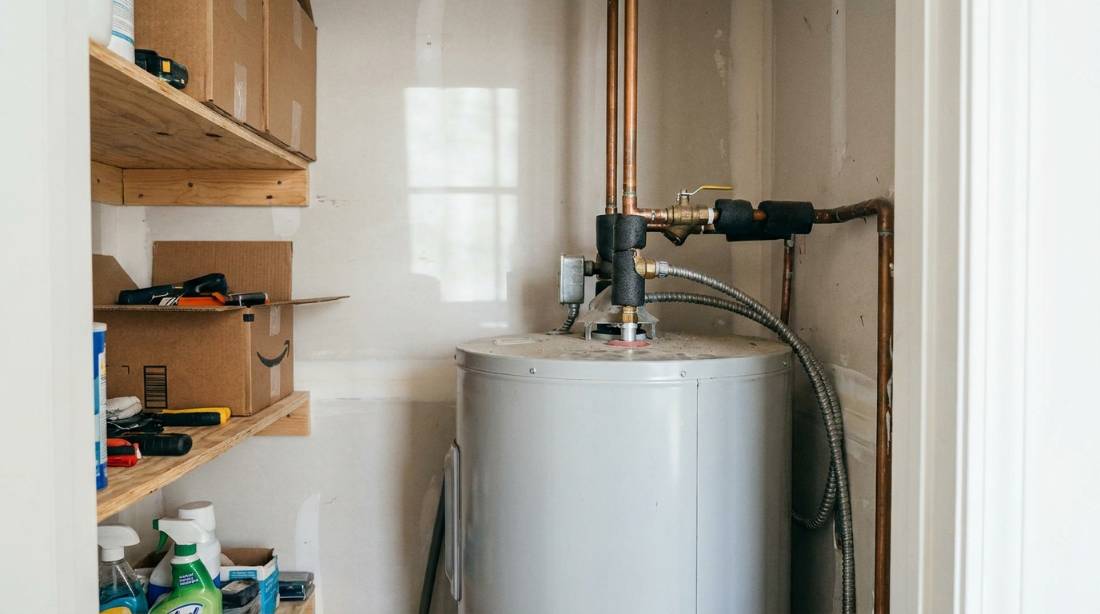
Water heater installation
Replace it on a Tuesday, not on a Sunday night
Most water heaters are replaced in an emergency, from whatever is on the truck, at whatever capacity the old one happened to be. A planned replacement lets you get the sizing right, correct whatever was wrong with the original installation, and choose on something other than availability.
Statewide. Emergency replacements too, but plan it if the tank is over ten years old.
Specification
Four decisions before anyone buys anything
The unit matters less than these four. Get them right and almost any decent heater performs well.
Capacity, by peak hour
Not gallons in the tank but first-hour rating, how much hot water it delivers during your busiest hour. Two showers, a dishwasher and a load of laundry at 7am is a real specification, and it is often larger than what is currently installed.
Fuel and what is available
Gas recovers faster and runs cheaper where a line exists; electric is simpler and suits houses with no gas service. Heat pump units cut running cost substantially but need space, air volume and a reasonable ambient temperature.
Where it lives
A garage, crawl space or unconditioned basement affects standby loss, freeze risk and, for gas, combustion air and venting. An interior closet has its own clearance and pan requirements.
Hard water protection
In Kentucky water, an accessible anode rod, a proper drain valve and a realistic flushing plan matter more to the lifespan of the unit than any brand.
Tank over ten years old? Specify the replacement now, install it when it suits you.
Plan It ProperlyOn the day
What a replacement involves
Isolate and drain the old unit
Water off, gas or breaker off, tank drained and disconnected. A full fifty-gallon tank is heavy and awkward, and removing it from a basement or a tight closet is frequently the hardest physical part of the day.
Set the new unit and bring it to code
Position and level, connect water with unions so the next replacement is easier, fit a new relief valve and a discharge pipe to the required termination, and confirm the drain pan and its outlet. Where the old install was non-compliant, and many are, this is where it gets corrected.
Venting, expansion, fill and test
Gas units need correct venting, adequate combustion air and a draft test after firing. Any house with a check valve or pressure regulator on the supply needs a thermal expansion tank. Then fill, purge air, fire up, verify temperature, and check every connection under pressure.
Ask what the quote includes
Removal and disposal of the old unit, new shutoff and flex connectors, expansion tank if required, drain pan and discharge, any venting correction, and the permit. Those items are the difference between two quotes that appear to be for the same heater.
Set the thermostat at 120°F. It is hot enough for household use, it materially reduces scald risk, and it slows scale formation in hard water. Higher settings are sometimes recommended for specific health reasons, if that applies in your household, discuss a mixing valve rather than simply running the whole system hotter.
Options
What to put back in
For most Kentucky houses the honest answer is a conventional tank, correctly sized and properly installed. The alternatives are genuinely better in specific circumstances and oversold in all the others.
Conventional gas or electric tank
Cheapest to buy and install, simplest to service, and entirely adequate for the majority of houses. Gas recovers faster; electric costs less to install where no gas line exists. Expect eight to twelve years in hard water.
Heat pump (hybrid) electric
Two to three times the efficiency of a resistance electric tank, with a real reduction in running cost. It needs roughly a thousand cubic feet of air around it, produces cool exhaust air and condensate that has to drain, and works poorly in a very cold space. A basement in Kentucky is often a good home for one; an unheated garage in January is not.
Tankless
Endless hot water and no standby loss, but the installation is the significant part, gas line sizing, dedicated venting and, in hard water, a scale management plan and annual descaling. It suits some houses very well and is a poor value proposition in others.
Sizing over brand
A correctly sized mid-range unit properly installed will outperform a premium unit that is too small or badly vented every single time. If the household has grown or gained a bathroom since the last replacement, this is the moment to correct the capacity.
The two things that determine whether you are happy with a water heater are its first-hour rating and the quality of its installation. Almost nothing else registers.
Sized to your peak hour, not to the old label.
Talk to a Pro TodayKentucky specifics
What the local conditions demand
Hard water, unconditioned installation spaces and a lot of well supply.
Hard water
Plan for scale from day one
Mineral deposits in the tank and on electric elements are the main life-limiting factor for water heaters across the state. Sediment insulates, steals capacity and causes the rumbling.
Specify an accessible anode and a usable drain valve, flush annually, and consider softening. That combination beats any brand choice.
Unconditioned spaces
Garages, crawl spaces, cellars
Heaters in unheated spaces lose standby heat all winter and their connections are exposed to freeze risk. Combustion air and venting also behave differently in a cold, draughty space.
Insulating the first several feet of pipe at the tank is inexpensive and pays back quickly.
Well systems
Sediment and sulphur
On a private well the water arrives with a sediment and mineral load that municipal supply does not carry, and hydrogen sulphide reacts with a standard magnesium anode to produce the rotten-egg smell.
An aluminium-zinc anode and sediment filtration are worth specifying at installation rather than retrofitting after the complaints start.
Permits and code
Required in most jurisdictions
Water heater replacement is permitted work in most Kentucky cities and counties, and the inspection covers relief valve discharge, venting, expansion control and seismic or strapping requirements where they apply.
A contractor who proposes skipping the permit is proposing skipping the inspection, which is the part that protects you.
Household size, number of bathrooms, fuel available, and where the tank lives.
Related work
Repair first if it is worth it, and what protects the new one.
Questions
Water heater installation, answered straight
Size by first-hour rating rather than by tank gallons, how much hot water the unit delivers during your busiest hour. Count what actually runs at 7am: showers, dishwasher, laundry. Households frequently need more than the tank they are replacing, because the house gained a bathroom or people since it was installed.
Gas recovers faster and usually costs less to run where a line already exists. Standard electric is simplest and cheapest to install without gas service. A heat pump unit cuts running cost substantially but needs air volume, a drain for condensate and a reasonably warm space, a Kentucky basement often suits, an unheated garage does not.
Sometimes. It gives endless hot water and no standby loss, but the install is the real cost: gas line sizing, dedicated venting, and in hard water a descaling regime that must actually be followed. It is excellent in the right house and poor value in the wrong one, get both options quoted.
In most Kentucky jurisdictions, yes. The inspection covers relief valve discharge, venting, combustion air, expansion control and pan requirements, the details that matter for safety. A contractor suggesting you skip the permit is suggesting you skip the check on their own work.
A small tank that absorbs the pressure increase as water heats. If your supply has a check valve, backflow preventer or pressure regulator, very common, the system is closed and that expansion has nowhere to go, which stresses the tank and pops the relief valve. In a closed system it is required, not optional.
A straightforward like-for-like tank swap is typically two to four hours. Changing fuel, relocating the unit, correcting venting, adding an expansion tank or upsizing capacity extends it. Removing an old tank from a tight basement or closet is often the slowest part.
120°F suits most households: hot enough for normal use, materially safer against scalding, and slower to form scale in hard water. If a specific health consideration calls for a higher tank temperature, the right answer is a thermostatic mixing valve rather than delivering hotter water to every tap.
Flush it annually, check the anode rod at about five years and replace it when consumed, keep the thermostat at 120°F, and address hard water if you can. Those four together are worth more years than any difference between brands or warranty tiers.
Every water heater gets replaced eventually
Doing it on your own schedule means the right size, the right fuel and an installation nobody rushed.