Lexington, Fayette County
Plumbers across every Lexington neighborhood
All more than any other community in Kentucky, from the Victorian streets around Gratz Park out to the newest build inside Man o’ War. Five district pages below, because the limestone under this city does not behave the same way everywhere.
Open 24 hours. Give us the street and what is happening.
- the most in Kentucky
- Karst and hard-water specialists
- Hidden leak detection
- 24/7 emergency response
A city built on soluble rock
Lexington sits on limestone that water dissolves. Over a very long time that has produced karst, open joints, swallow holes, cave passage and sinkholes that appear in ordinary back gardens. It is why the Town Branch, the creek the city was founded on, spends much of its length in a culvert, and why a leak here behaves unlike a leak almost anywhere else.
The practical consequence is that escaping water does not stay put. A service-line leak finds a joint in the rock and travels, surfacing fifty yards away in a neighbor’s yard or never surfacing at all. In this city a water bill that has doubled with nothing visibly wet is not a mystery, it is the standard presentation. Which means locating the leak comes before any excavation, always.
The second consequence is the water itself. Everything the supply touches on its way to your tap is limestone, so Lexington has genuinely hard water, dissolved calcium and magnesium that scales a water heater element, crusts an aerator within months and shortens the life of every cartridge valve in the house. Softeners earn their keep here in a way they do not in Louisville.
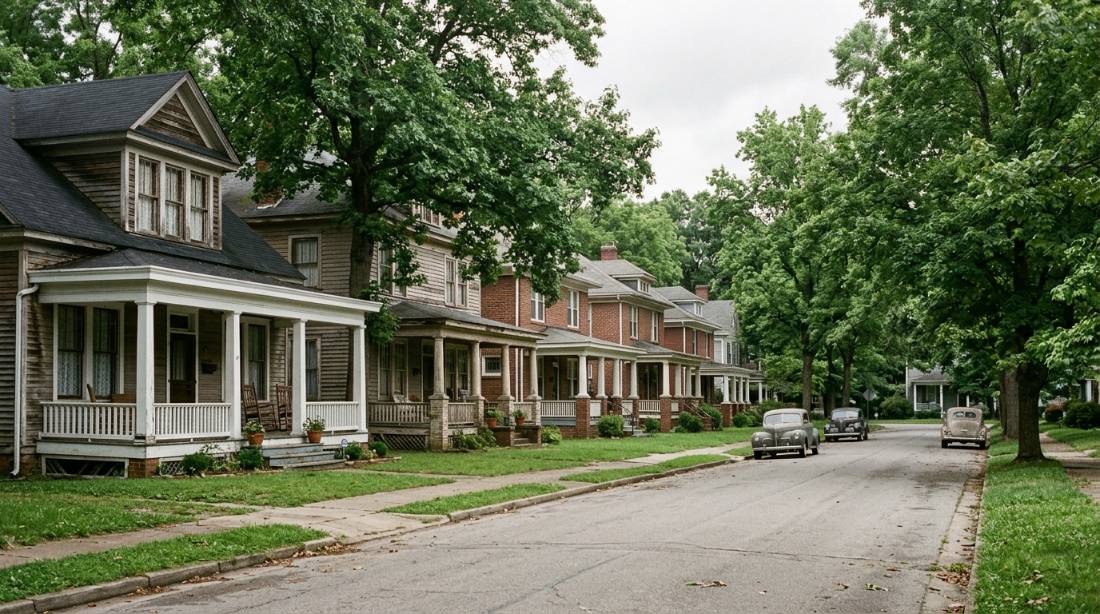
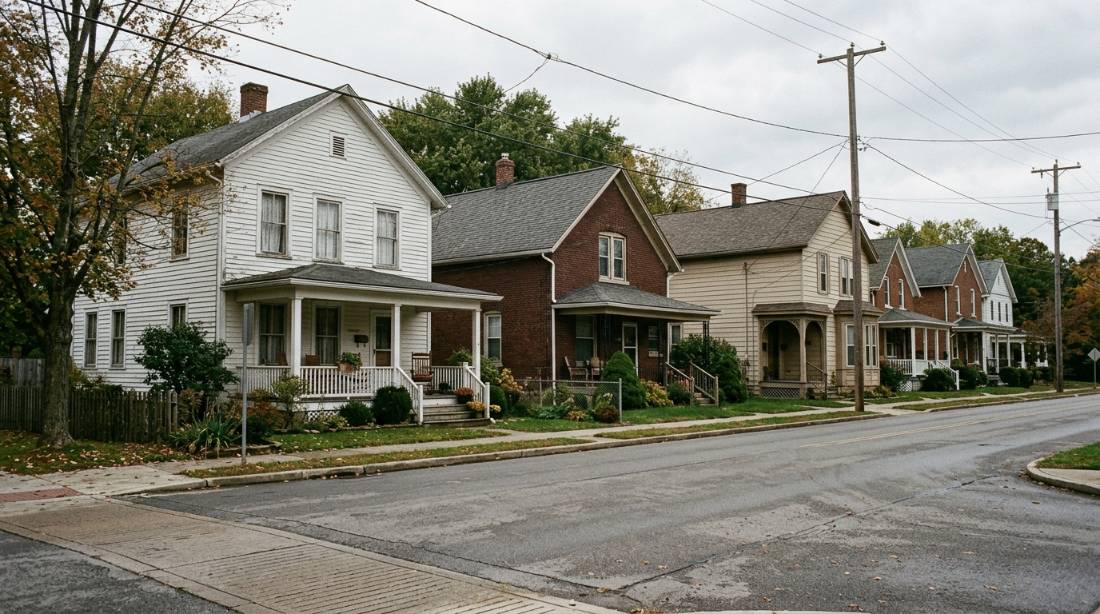
The housing spans a century and a half. Gratz Park, the streets north of Main and the blocks around Woodland Park are Victorian and Edwardian, with basements and original metal pipe. Chevy Chase, Ashland Park and Southland are 1920s to 1950s. Everything outside New Circle is postwar, and everything outside Man o’ War is essentially modern, slab, PEX, and equipment rather than pipe as the usual failure.
A bill that doubled with nothing to see
Shut every fixture in the house and watch the meter. If it is still turning you have a leak, and in karst there may be nothing wet to find. Acoustic location next, not a shovel.
Bill jumped and nothing looks wet? That is the most common leak call in this city. Describe it and we will say where to look.
Get Help FastFive districts
Find your part of the city
Grouped by what a pro expects to find, the age of the housing, the depth to rock, and whether you are inside New Circle.
Downtown & Central
Gratz Park, the Northside, Woodland Park, Aylesford and the university edge. Victorian stock, basements, original cast iron and galvanized.
North Lexington
Winburn, Meadowthorpe, Cardinal Valley, Coolavin and the Georgetown Road corridor. Postwar tract housing on shallow rock.
East Lexington
Chevy Chase, Ashland Park, Idle Hour, Hamburg and the Richmond Road corridor. 1920s brick through to new build.
South Lexington
Southland, Zandale, Gardenside edge, Beaumont, Andover Forest and inside Man o’ War. Slab, PEX and equipment.
West & Rural Fayette
Masterson Station, Griffin Gate, the horse farms along Versailles and Old Frankfort Pike. Wells, long runs, big lots.
Not sure which one?
Say the street name or the nearest cross street. Whoever answers knows the city and will place you in about four seconds.
Every Lexington communities is covered on the same number at any hour, whichever district page you land on.
Coverage detail
Communities we cover around Lexington
Lexington, ZIPs 40502 and 40503 and 40504, and the surrounding Fayette County communities. One crew covers the whole area, so it makes no difference which side of a town line your street sits on.
Also covered in Fayette County
Not sure which town you are technically in? Give us the street name and we will sort it.
Ground conditions
What a pro expects to find in Lexington
The rock, the water chemistry and the decade the house was built, in that order.
Karst
Water travels through rock
Soluble limestone with open joints and cave passage, often only a few feet below the topsoil. Escaped water moves a long way from where it left the pipe, and frequently never surfaces.
Never dig on a guess. Acoustic and pressure-based location first, excavation second and only where the reading says.
Hard water
Straight off the limestone
Dissolved calcium and magnesium at levels that scale a heater element, crust an aerator within months and shorten every cartridge valve in the house.
A softener sized from an actual water test is one of the few upgrades in this city that genuinely pays for itself.
Sinkholes
Both cause and consequence
A new depression in a lawn can be natural karst collapse, or a failed sewer lateral quietly washing soil into a void beneath it. Identical from above.
Get a camera down the line before assuming geology, and before assuming plumbing. It settles it for a fraction of an exploratory dig.
Any hour, anywhere in Fayette County.
The services called for most in Lexington
Hidden leaks, hard water, and sewer laterals moving through karst.
Questions
Lexington questions
It is the single most common leak presentation in Lexington. In karst the escaping water follows joints in the limestone rather than pooling at the surface, so there is frequently nothing at all to see. Shut every fixture off and watch the meter: if it is still turning you have a leak, and the next step is acoustic detection rather than digging where you think it might be.
Hard enough to matter. Kentucky American Water draws from the Kentucky River and from limestone aquifers, and the dissolved calcium and magnesium come with it. The practical effects are scale on water heater elements, aerators that clog every few months and shortened life on cartridge valves. A test gives you the actual grains per gallon so a softener can be sized rather than guessed at.
Yes. The number is answered at any hour, every day, including weekends and holidays. For Lexington the overnight call is usually a burst supply line, a failed water heater or waste coming back up a floor drain, and all three are worth waking someone for.
The street name, the symptom in your own words, and how long it has been going on. For Fayette County it also helps to know whether the property is up a hill, on a bottom, or off a long private drive, because that decides which vehicle can get to you.
Not us. We match the job to a licensed independent plumber working near 40502 and hand it over. That is deliberate, it means the person who arrives already works these roads instead of driving in cold from two counties away.
We do not quote on this site, because the honest answer depends on the job, the access and what is behind the wall. What we will do is tell you what the plumber is likely to look at first, so the price you are given afterwards makes sense to you.
Three places worth checking: the meter pit at the property line, the point where the supply comes through the foundation or crawl space, and the cold inlet on top of the water heater for the hot side alone. In older Lexington houses the indoor valve may be seized, which is worth knowing in advance.
Walk the house looking for pipe you can see and touch: those are the ones that freeze. Cover them, leave a cabinet door open under an outside-wall sink on a bad night, and know where the shutoff is, because a split line does its worst in the twenty minutes before someone finds the valve.
Gratz Park, Chevy Chase, Hamburg or a farm on Old Frankfort Pike
One number for all 39 Lexington communities, answered around the clock.