Downtown & Old Louisville
Plumbers for the Victorian core of the city
Downtown, Old Louisville, SoBro, the Original Highlands, Germantown and Schnitzelburg, the core districts holding the oldest continuously occupied housing in Jefferson County, and nearly all of it on a combined sewer.
Open 24 hours. Give us the street and what is happening.
- Also: East Louisville · South Louisville · Southwest Jefferson
- Combined sewer nearly throughout
- Cast iron and galvanized specialists
- 24/7 emergency response
Beautiful housing, nineteenth-century plumbing
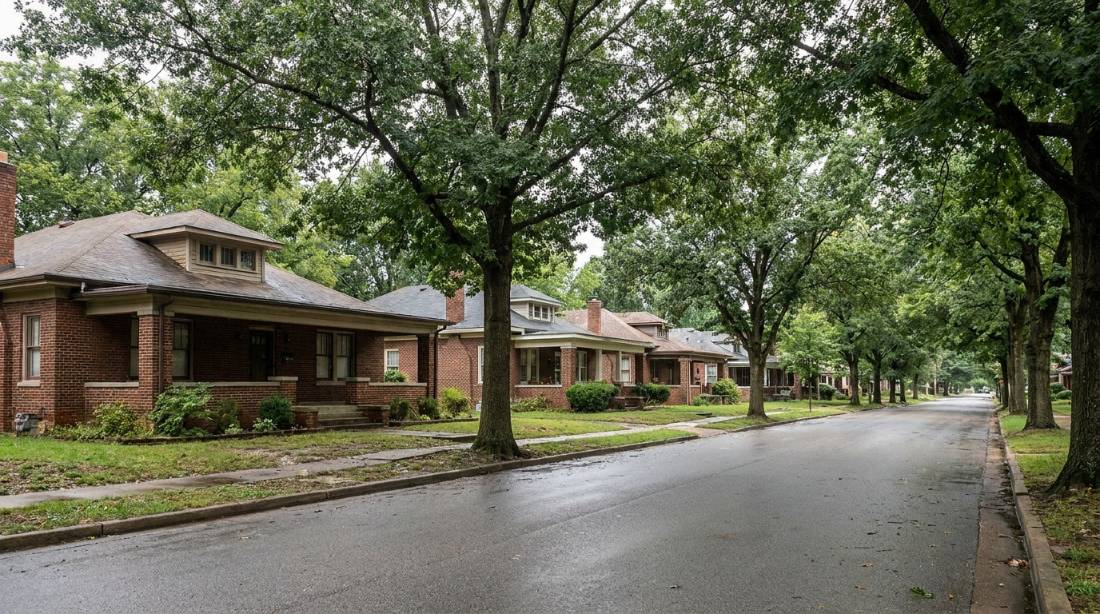
Old Louisville is the largest contiguous Victorian neighborhood in the United States, and that is a plumbing fact as much as an architectural one. These houses were built with cast iron waste stacks and galvanized supply, three or four storeys of it, and a great many were subdivided into apartments in the mid-twentieth century by adding fixtures to a stack that was never sized for them.
The result is a specific and very common failure pattern: one stack serving bathrooms added decades apart, scaled down to a fraction of its bore, blocking repeatedly in the same place. Rodding it clears the symptom. A camera inspection shows whether the pipe still has a wall worth keeping.
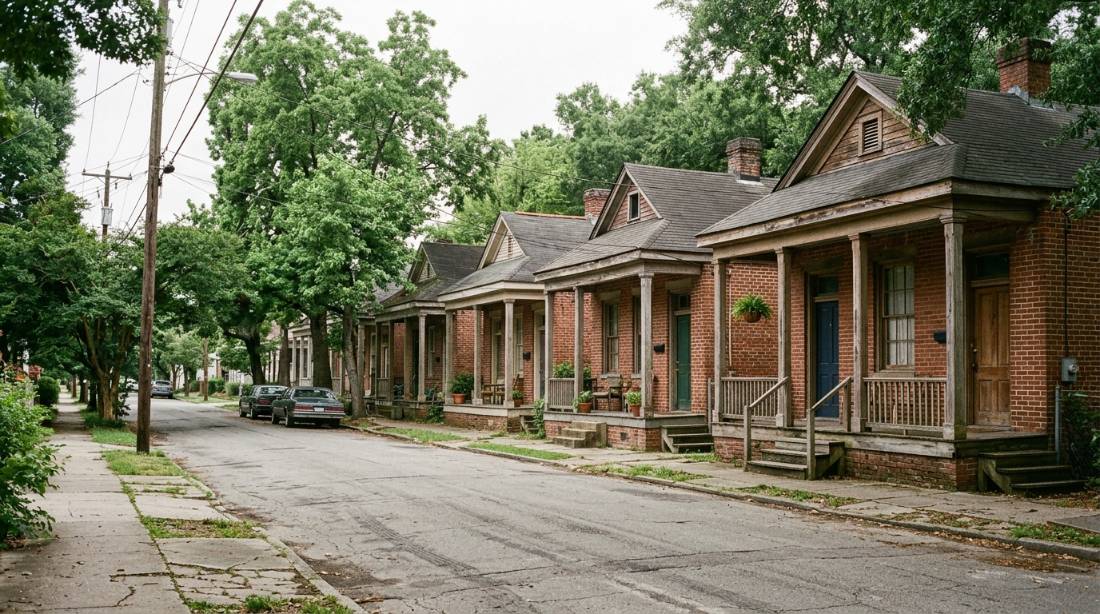
The basements are deep, dry-laid or brick, and almost universally on a combined sewer. Germantown and Schnitzelburg add shotgun and camelback houses on small lots where the lateral runs out to an alley main, which means access is through a narrow gap between buildings rather than an open yard.
SoBro and the Original Highlands sit between the two, with a mix of large converted houses, small commercial and 1920s infill. Downtown proper is mostly commercial and multi-storey, where the questions are about risers, backflow prevention and grease rather than anything domestic.
If you live in a converted apartment
A blockage or a leak here affects neighbors quickly, and the fixture causing it is often not in your unit. Say it is a multi-unit building when you call, it changes what the pro brings and who needs to be there.
Water coming through a ceiling? In these houses that is usually two floors above where you are looking. Call and we will talk you through it.
Get Help FastNeighborhoods
Where we work in the core
Dense historic core, and the housing changes character every few blocks.
Old Louisville
Three and four-storey Victorian houses, many subdivided. Cast iron stacks, deep basements, combined sewer.
Downtown
Commercial and multi-storey residential. Risers, backflow prevention, grease interceptors and after-hours access.
SoBro
Between downtown and Old Louisville, converted houses, small commercial and 1920s infill on the same block.
Original Highlands
Late Victorian and early bungalow stock along Barret and Baxter, on small lots with alley laterals.
Germantown
Shotgun and camelback houses on narrow lots. Tight side access and alley-side sewer connections.
Schnitzelburg
Same era and same shotgun pattern as Germantown, with slightly newer infill toward Goss Avenue.
University of Louisville area
Dense rental conversions around Belknap campus, multiple fixtures added to original stacks.
Limerick & Shelby Park
Older frame and brick stock east and west of Old Louisville proper, much of it undergoing renovation.
If your street sits on the boundary between two of these, it makes no difference to the call.
Coverage detail
Communities we cover in Downtown & Old Louisville
This district covers the Victorian core, downtown and the shotgun-house neighborhoods immediately southeast of it. Nearly all of this area is on a combined sewer.
Downtown & Old Louisville
We also cover downtown addresses.
Ground conditions
What a pro expects to find here
Old pipe, old sewer, and access measured in inches rather than feet.
Cast iron
Stacks past their design life
Original cast iron waste stacks that have scaled inward, cracked at the hub or lost the bottom bend into the basement floor. Repeated blockages in the same spot are the tell.
A camera inspection before rodding tells you whether you are clearing a pipe or delaying a replacement.
Combined sewer
Storm and waste together
Almost the whole district. A hard summer storm fills the main and the lowest opening in the house becomes the relief point.
A backwater valve is the fix. In a subdivided building it protects every unit below street level, not just yours.
Access
Narrow lots, alley laterals
Shotgun houses with a few feet between them, laterals running to alley mains, and basements reached by steep original stairs.
Heavy plant frequently cannot get to the pipe. Trenchless methods and small-tool work are the normal answer here.
Any hour, anywhere in the core.
The services called for most in this district
Old metal pipe, combined sewers and multi-unit buildings.
Questions
Downtown and Old Louisville questions
Because rodding punches a hole through the blockage rather than restoring the pipe. In a Victorian house with original cast iron the bore has usually scaled down to a fraction of its diameter, so it re-blocks on the same debris. A camera tells you whether hydro jetting will restore it or whether that section needs replacing.
Practically, everyone’s, and the source is often not in the unit below the wet patch. In these buildings one stack serves fixtures added over eighty years, so a failure two floors up appears in your ceiling. Tell us it is a multi-unit building when you call: the pro needs access to more than one apartment and it saves a wasted visit.
Sometimes not, and it is better to know first. Shotgun houses sit a few feet apart with laterals running to an alley main, so an excavator often has no route to the pipe. Trenchless replacement and hand work are routine here rather than exceptional, and a pro will tell you which is possible on site.
Usually worth repairing in sections. Galvanized and cast iron fail in identifiable runs, so pressure testing and a camera survey often show one riser or one stack is the problem. Replacing that and planning the rest across a few years is normal, considerably cheaper, and much less destructive to plasterwork that is a century old.
Probably not. On a combined sewer heavy rain raises the level in the main, and if your floor drain is the lowest opening you get the smell, and sometimes the water, regardless of the condition of your own line. Do not add to it by running the washer, and ask about a backwater valve.
Yes. Multi-storey risers, backflow prevention, grease interceptors, restaurant kitchens and after-hours work are all covered, and after-hours is often the only sensible time. Say it is commercial when you ring so the right pro is sent rather than a residential one.
No. Kentucky Plumbing HQ is a referral service: we take the call, work out what the job is, and connect you with an independent local plumbing professional who works in your area. Pricing, the work and the workmanship guarantee are between you and the contractor who attends.
Old Louisville, Germantown, SoBro or a downtown high-rise
One number for the whole core, answered around the clock.