East Lexington
Plumbers from Chevy Chase out to Hamburg
Chevy Chase, Ashland Park, Kenwick, Idle Hour, Mount Tabor, Hamburg and the Richmond Road and Todds Road corridors, the east-side neighborhoods covering eighty years of building, from 1920s brick to subdivisions finished last year.
Open 24 hours. Give us the street and what is happening.
- Also: Downtown & Central · North Lexington · South Lexington
- 1920s brick to new build
- Sewer laterals under mature trees
- 24/7 emergency response
Eighty years of building along one road out
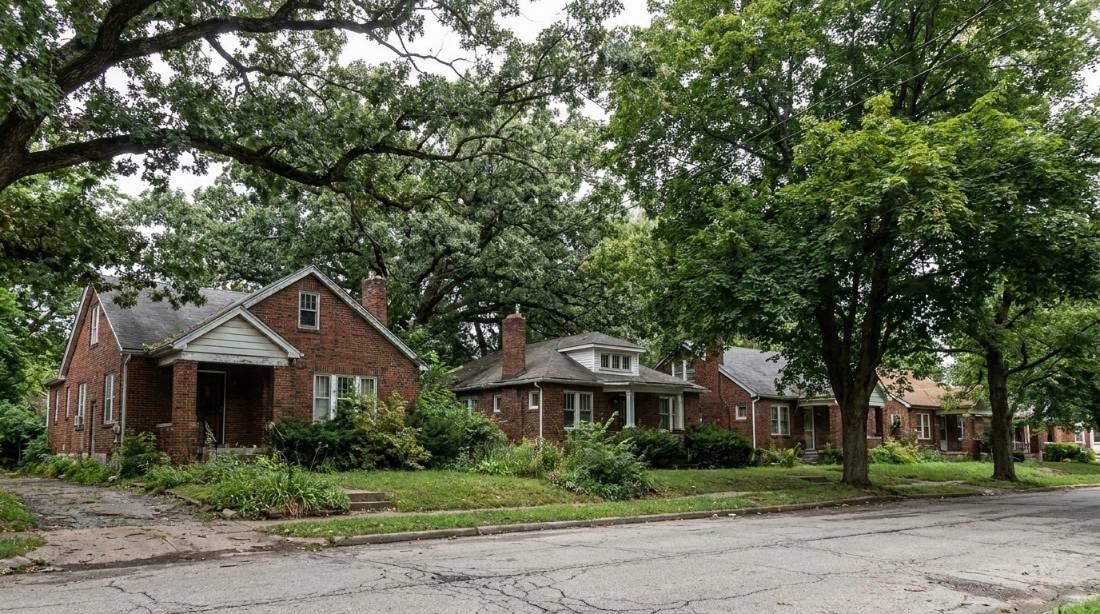
Drive out Richmond Road or Tates Creek and you pass through the whole arc of the city’s growth. Ashland Park and Chevy Chase are 1920s and 1930s, substantial brick houses, basements, and a mid-century copper repipe layered over whatever was there first. Kenwick and Idle Hour are 1940s and 1950s. Past Man o’ War, Hamburg and the Todds Road subdivisions are essentially modern.
That progression is the diagnosis. In Ashland Park and Chevy Chase the recurring theme is a repipe that stopped halfway, copper feeding the main floor, original galvanized still feeding an upstairs bathroom or a back addition, and pressure that keeps dropping on whichever floor got left behind. Pressure testing finds the join.
The other constant in the older east end is mature trees over the sewer lateral. These are the streets with the big canopy, and eighty-year-old clay or cast iron laterals under eighty-year-old root systems block on a predictable schedule. A camera shows how much pipe is actually left; jetting clears it, and a liner or a replacement section stops it recurring.
Hamburg and the newer eastern subdivisions bring a completely different list: water heaters aging out together, failing pressure regulators, irrigation backflow devices due for their annual test, and the ordinary fixture work of houses whose pipe is entirely sound.
Recurring main-line blockages
If the whole house drains slowly at once, the problem is downstream of every fixture, the lateral, not the traps. Under a mature canopy that usually means roots. Get a camera on it before rodding it again.
Whole house draining slowly? That is one problem, not five. Describe it and we will tell you what to check.
Get Help FastNeighborhoods
Where we work in the east end
The east side runs from the edge of downtown out past Man o’ War.
Ashland Park
1920s and 1930s brick on generous lots, basements throughout, heavy tree canopy over the laterals.
Chevy Chase
Interwar housing around the shopping district, largely with basements and layered repipes.
Kenwick
1930s and 1940s bungalows on smaller lots east of Ashland Avenue.
Idle Hour
Postwar ranch and split-level along Richmond Road, crawl space and basement mixed.
Mount Tabor & Palomar edge
Later postwar subdivisions between Richmond and Tates Creek roads.
Hamburg
Modern subdivision and commercial development north of Man o’ War, slab and PEX.
Todds Road corridor
Newer build and remaining rural parcels running east toward Clark County.
Andover & Polo Club
Late-century golf-course subdivisions with irrigation systems and backflow devices.
Athens & rural east Fayette
The far eastern edge, larger lots, some properties still on private wells.
If your street sits on the boundary between two of these, it makes no difference to the call.
Coverage detail
Communities we cover in East Lexington
This district covers the east side, from the Chevy Chase shops out through Hamburg to the Clark and Madison county boundaries. It is one of the largest by area in the city.
East Lexington
straddles this district and the central one; both are covered either way.
Ground conditions
What a pro expects to find here
Tree roots, half-finished repipes, and out past Man o’ War, equipment rather than pipe.
Root intrusion
Mature canopy over old clay
The interwar east end has the biggest trees in the city and the laterals to match. Roots enter at joints in clay and cast iron and rebuild the blockage every few months.
A camera establishes how much pipe is left. Jetting clears it; a liner or replacement section stops it returning.
Layered plumbing
Repipes that stopped halfway
In Ashland Park and Chevy Chase a mid-century copper repipe frequently ended wherever was convenient, leaving original galvanized feeding an upper floor or a back addition.
Pressure testing finds the join. Finishing the repipe is cheaper than chasing symptoms for another decade.
Newer subdivisions
Sound pipe, ageing equipment
Out past Man o’ War the pipe is fine. The failures are water heaters reaching fifteen years across a whole street, pressure regulators, and irrigation backflow devices due for testing.
Almost entirely plannable work, which means it can be scheduled and priced properly rather than handled at 2am.
Any hour, anywhere in the east end.
The services called for most in this district
Root-blocked laterals, half-finished repipes and aging equipment.
Questions
East Lexington questions
Under the east-end canopy, almost certainly. Roots seek the moisture at a joint in clay or cast iron pipe, enter, and rebuild the blockage over a few months, and spring growth is when it shows. A camera tells you how much sound pipe is left. Jetting clears the intrusion; a cured-in-place liner or a replacement section is what stops it recurring.
It is very common in Ashland Park and Chevy Chase, where a mid-century repipe stopped at whatever was convenient. The practical issue is that the remaining galvanized keeps narrowing with rust, so pressure continues to drop on whichever floor it feeds. Finishing the repipe is usually cheaper overall than another decade of pressure complaints.
No, a subdivision built in one go gets its equipment installed in one go, and tanks last roughly ten to fifteen years. If yours is that age and the neighbors are replacing theirs, plan for it rather than waiting for the tank to weep onto a finished floor. Planned replacement is cheaper and you choose the size.
Yes, and on most systems connected to a public supply it is required annually. It is quick and inexpensive, and it is exactly the kind of thing that gets forgotten until a notice arrives. Mention it if a pro is already coming out for something else and it can be done on the same visit.
A few, on the larger lots near the Clark and Madison county lines. If you are on a private well, a pressure complaint may be a pressure tank or a switch rather than anything to do with a main. Say so when you call, it is a genuinely different diagnosis and a different pro.
Locate before anything gets lifted. Acoustic and electronic location traces the line so you know exactly where it runs and whether it is leaking. In karst a leaking line under a paved area can also be washing out the base, which is worth knowing before you spend money relaying the patio.
No. Kentucky Plumbing HQ is a referral service: we take the call, work out what the job is, and connect you with an independent local plumbing professional who works in your area. Pricing, the work and the workmanship guarantee are between you and the contractor who attends.
Ashland Park, Chevy Chase, Idle Hour or Hamburg
One number for the whole east side, answered around the clock.