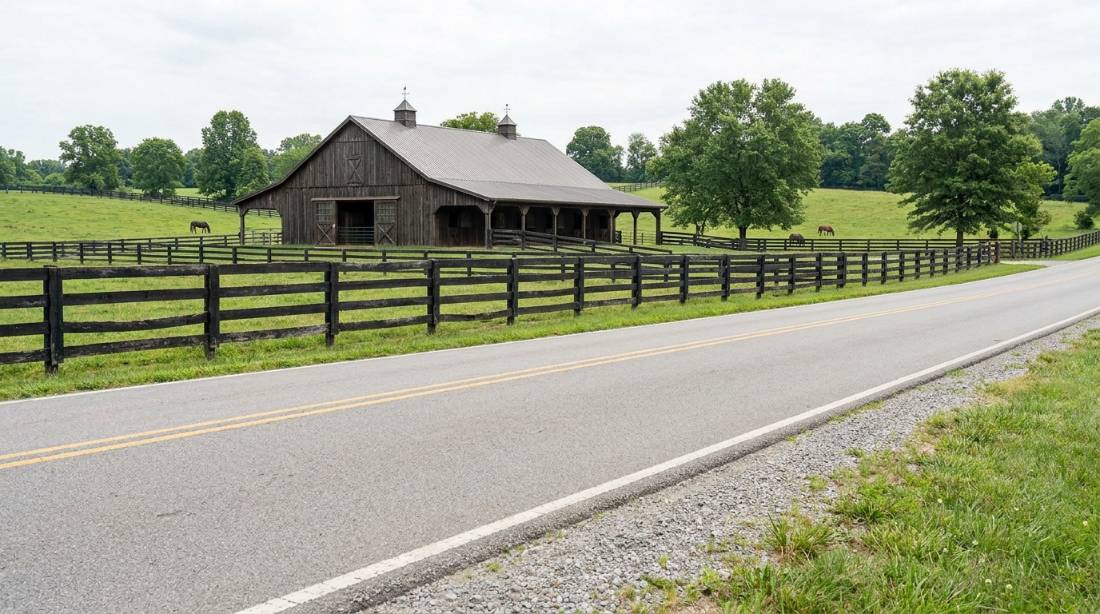
West & Rural Fayette
Plumbers for the farm side of the county
Masterson Station, Griffin Gate, Spindletop, and the horse farms along Versailles Road, Old Frankfort Pike, Leestown Road and Georgetown Road, where the lots get big, the service runs get long, and a good many properties are on their own well.
Open 24 hours. Tell us the pike and the nearest gate.
- Also: Downtown & Central · East Lexington · North Lexington
- Wells, pressure tanks and long runs
- Barn and paddock plumbing
- 24/7 emergency response
Where Lexington stops being a city
West of Newtown Pike and outside New Circle the county changes character completely. This is the horse-farm side of Fayette, large parcels along Old Frankfort Pike, Versailles Road, Leestown Road and Rice Road, with houses set well back from the road, barns and outbuildings scattered across the property, and service runs measured in hundreds of feet rather than tens.
The defining difference is that a lot of these properties are wholly or partly on private wells, with pressure tanks and long buried lines feeding houses, barns, stock waterers and wash bays. That changes the entire diagnostic order. A pressure complaint here is a pressure switch, a waterlogged tank or a failing pump long before it is anything to do with the plumbing in the house.
The second difference is distance. A leak on a two-hundred-foot buried run to a barn can waste an enormous amount of water without anybody noticing, and in karst it will not surface. Farm water bills are the usual way these get found, which is why location work earns its money on this side of the county.
And the ground here is the same soluble limestone as the rest of the Bluegrass, only with fewer buildings on it to notice what it is doing. Sinkholes open in paddocks. A depression near a buried line is worth taking seriously rather than filling in, because a leaking pipe washing soil into a void will keep making the hole bigger.
Stock waterers and freeze
A frozen or leaking automatic waterer is an animal-welfare problem as much as a plumbing one. If you keep livestock, the autumn check on heat tape, insulation and the buried runs to the paddocks matters more than anything indoors.
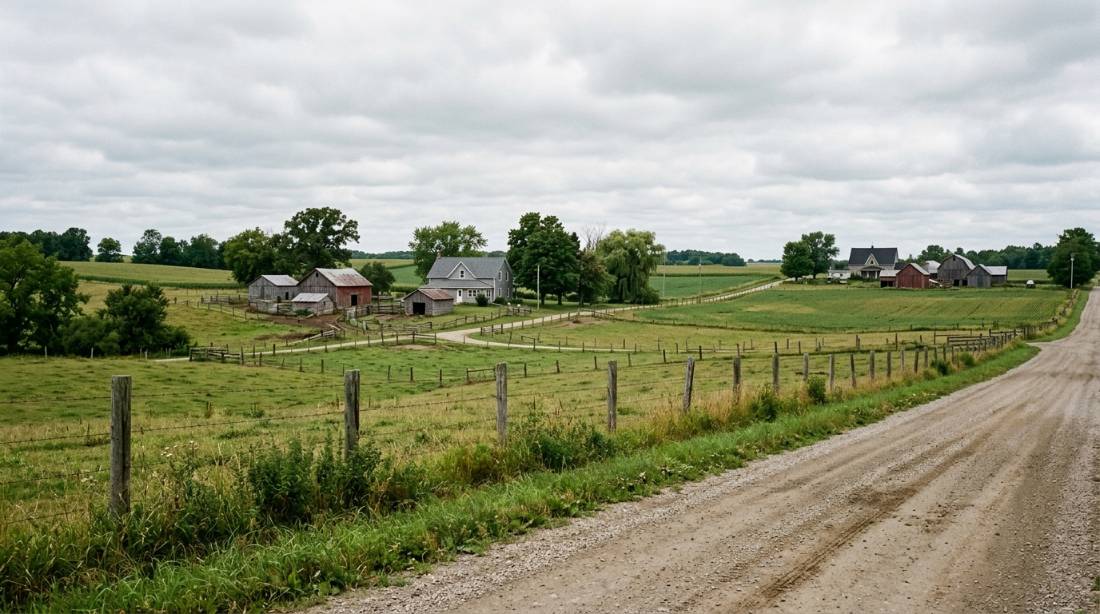
Farm, barn or paddock line? Say what it feeds and roughly how far it runs and we will send somebody who works on farms.
Get Help FastAreas
Where we work on the west side
From the newer subdivisions inside New Circle out to the Woodford and Scott county lines.
Masterson Station
Subdivision development around the park off Leestown Road, largely modern build.
Griffin Gate & Spindletop
Golf-course and estate development off Newtown Pike, with irrigation systems throughout.
Old Frankfort Pike
Some of the largest horse farms in the county, on private wells with extensive barn plumbing.
Versailles Road corridor
Mixed commercial, industrial and farm frontage running out to the Woodford line.
Leestown Road & Rice Road
Farms and rural residential northwest of the city, long service runs.
Yarnallton & Alexandria
Rural west Fayette, well and septic country, large parcels.
Coldstream & UK farm
Research farms and university agricultural land off Newtown Pike.
Huntertown & Fort Springs
The southwestern rural edge toward the Jessamine and Woodford boundaries.
On a farm, the pike name and the nearest gate are more useful to us than the communities.
Coverage detail
Communities we cover in West & Rural Fayette
This district covers the rural and western county.
West & rural Fayette
and also appear on the north Lexington page, the rural and suburban parts of both share a code. Either route reaches the same phone.
Ground conditions
What a pro expects to find here
Private systems, long distances, and karst with nobody watching it.
Private wells
Diagnose the system first
Wells, pressure tanks and switches feeding houses, barns, wash bays and stock waterers. A pressure complaint is nearly always the system, not the house.
Check the tank charge and pressure switch before condemning a pump, and stop cycling a pump that may be running dry.
Long buried runs
Leaks nobody sees
Two hundred feet of buried line to a barn can leak for months. In karst it will not surface, so the water bill is the only symptom.
Acoustic location along the run. Digging the whole line on a farm is not a realistic plan.
Karst in open ground
Sinkholes in paddocks
The same soluble limestone as the rest of the Bluegrass, with fewer buildings to reveal what it is doing. Depressions appear in fields and around buried lines.
Treat a new depression near a pipe as a possible failed line. Filling it without checking guarantees it comes back bigger.
Any hour, anywhere in rural Fayette.
The services called for most on the west side
Well systems, buried runs, barns and freeze protection.
Questions
West and rural Fayette questions
Possibly, but three cheaper things fail first: the pressure switch, the pressure tank losing its air charge, and a clogged filter or screen. A waterlogged tank makes the pump short-cycle, which is what eventually kills it. A pro checks the tank charge and the switch before condemning the pump, and in the meantime, stop cycling it.
Most likely a buried run to a barn, a paddock or a stock waterer. Two hundred feet of line can leak for months, and in karst the water leaves through joints in the rock without ever surfacing. Acoustic location along the runs finds it. Digging the whole line is not a realistic plan on a working farm.
Yes, wash bays, frost-free hydrants, automatic waterers, buried supply to outbuildings and the pressure systems that feed them. Say what the line feeds and roughly how far it runs when you call, so somebody who actually works on farms comes out rather than a residential pro.
Both are possible and they look identical. The distinguishing question is whether a buried line runs beneath it. A leaking pipe washes soil steadily into a karst void and produces a hole that keeps growing; natural collapse happens with no pipe involved. If a line runs anywhere near it, get that checked before filling anything.
On a farm, more than in town. Check heat tape and insulation on exposed runs, hydrants, and anything feeding a waterer; drain and isolate lines you will not use over winter; and confirm you know where the shutoffs for each outbuilding are. A frozen waterer is an animal-welfare problem, not just an inconvenience.
Test it rather than guess. Wells in this ground carry hardness as a matter of course, and some carry iron, sulphur or bacteria as well. Treatment sized from a test result works; a filter bought on a hunch usually does not. Annual testing is sensible on any well serving a house.
No. Kentucky Plumbing HQ is a referral service: we take the call, work out what the job is, and connect you with an independent local plumbing professional who works in your area. Pricing, the work and the workmanship guarantee are between you and the contractor who attends.
Masterson Station, Griffin Gate or a farm on Old Frankfort Pike
One number for the whole west side of the county, answered around the clock.